Rainer Korte

Data | Power: Navigating policy, regulation and networks

28 April 2026

Rainer Korte, Commissioner

Data Power series

28 April 2026 - The Wheeler Centre, Melbourne

29 April 2026 - Greenhouse, Sydney
Good morning. Thank you to The Energy for inviting me to this important conversation.
Australia is at a pivotal moment in its energy and digital transformation.

The energy transition is driving electricity demand growth through electrification and unprecedented levels of investment in renewable generation.

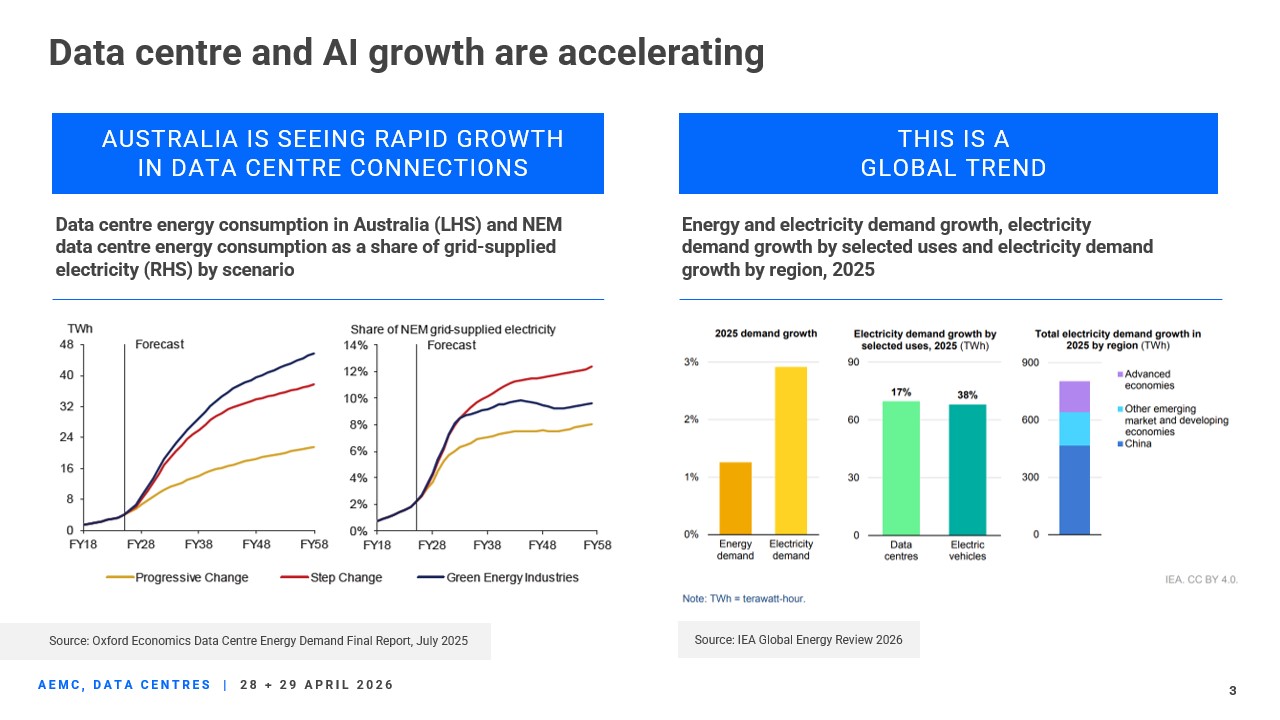
The digital transition is driving rapid growth in data centres and AI infrastructure, which have become among the fastest-growing components of electricity demand. 

That brings enormous upside: jobs, productivity, and a stronger digital economy.

But it also brings a very real challenge. If large loads aren't planned and integrated well, the consequences land squarely on the power system and its security, and ultimately on consumer bills.

So, the question for us at the Australian Energy Market Commission (AEMC), and across government and industry, is simple:

How do we enable this investment without compromising affordability or system security?

Today I'll cover three things:

  1. first, I will briefly discuss how governments are responding to the opportunities and risks that come with increasing data centre connections;
  2. second, how data centre growth is impacting the technical parameters of our power system and introducing new challenges, and;
  3. third, what we are doing at the AEMC to ensure the regulatory framework supports connecting this new demand efficiently and securely. 
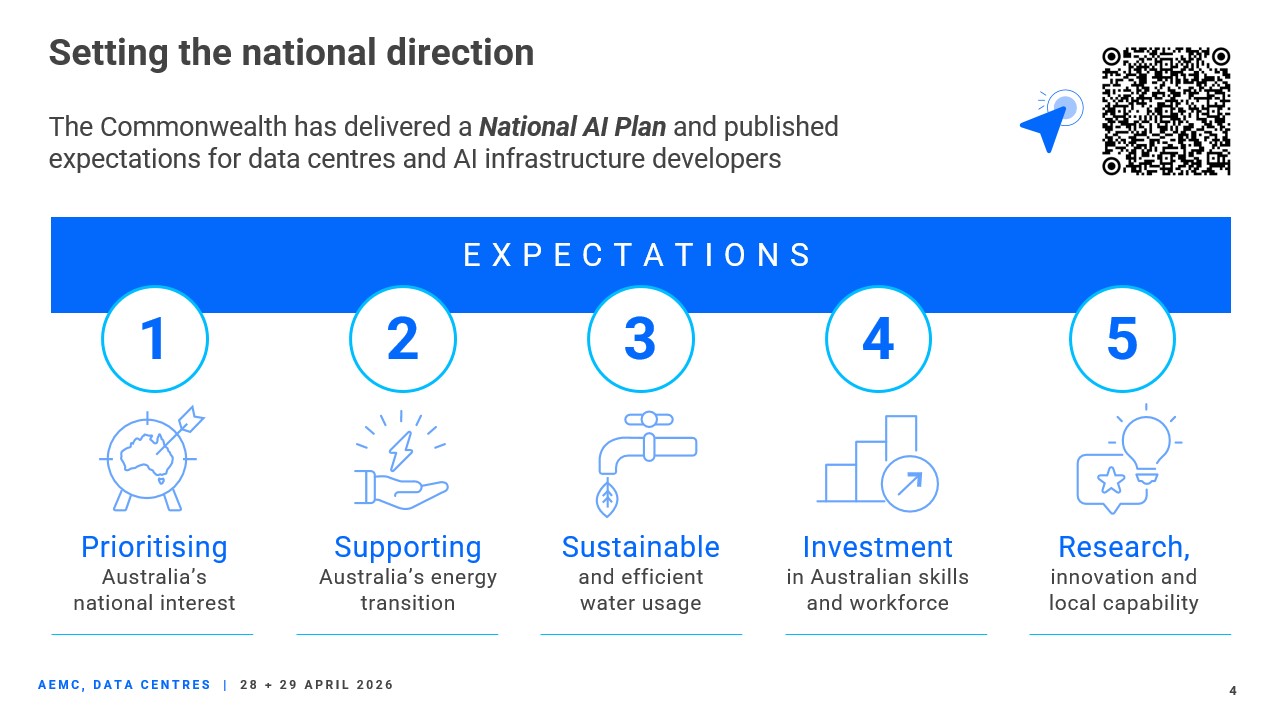
National expectations are setting the direction

The Commonwealth has set a clear direction through the release of its National AI Plan and key expectations (on the screen), stating that this digital infrastructure must serve the national interest and integrate responsibly into the energy system.

For us in the electricity industry, those themes translate into three expectations for data centres:

  • bring new clean energy
  • be flexible in how you use power, and
  • pay your way when connecting to the grid.

This is where the opportunity comes in.

Because when data centres meet these expectations, they don't just avoid harm; they actively support the system by underwriting new generation, shaping demand more efficiently and reducing pressure on shared network costs.
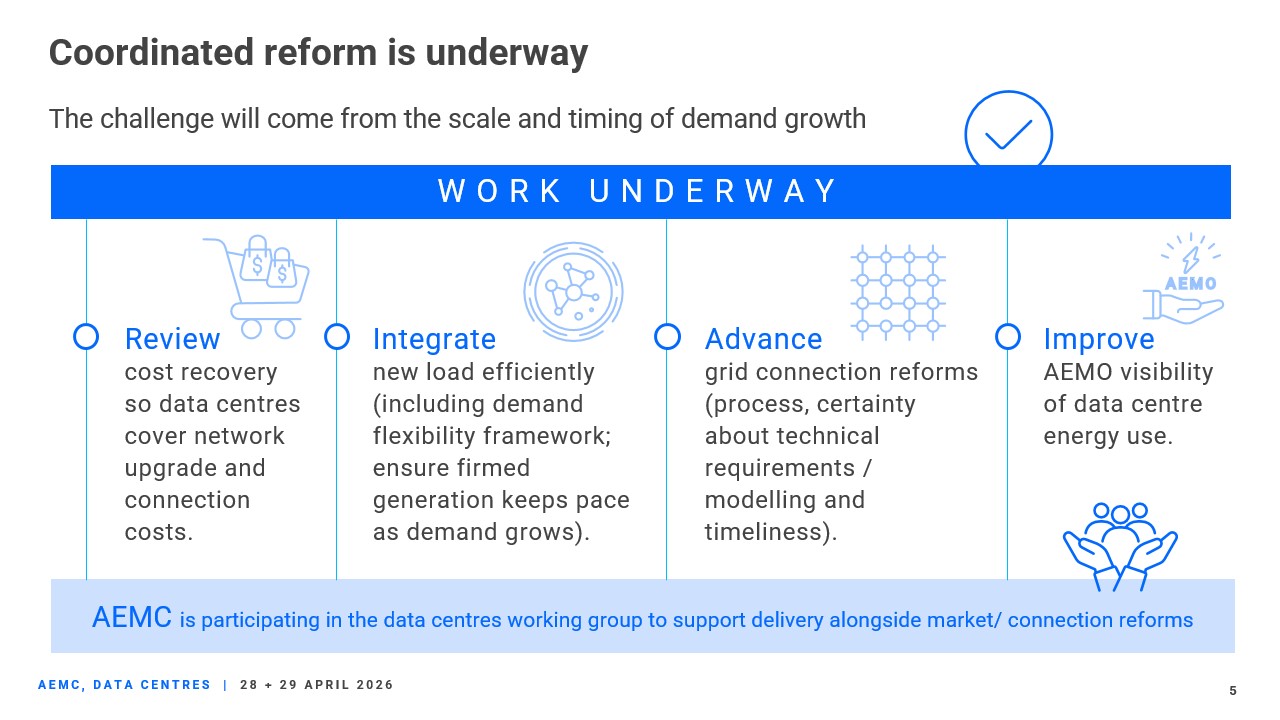
The AEMC, the Australian Energy Market Operator (AEMO), and the Australian Energy Regulator (AER) are working with governments to examine the impacts of data centre growth. 

The reform agenda is focusing on:

  • ensuring new loads fund their own network connections and augmentations
  • integrating demand efficiently, particularly through flexibility and firming
  • improving connection processes and technical certainty, and
  • increasing operational visibility of large loads.

At the AEMC, we're contributing to this work, particularly where it intersects with connection standards and system security.
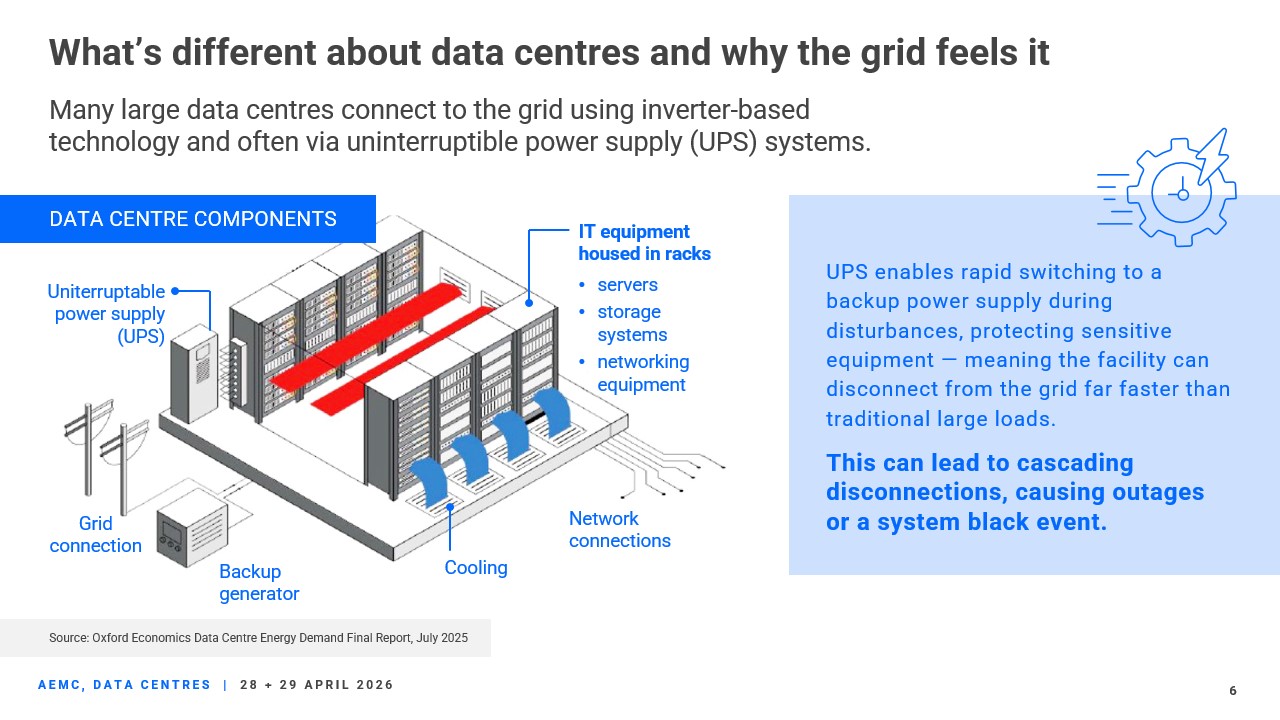
What's different about data centres and why the grid feels it

This brings me to the second item I want to discuss today: how data centre growth is impacting the technical parameters of the power system and introducing new challenges.

We are quickly learning, both here and overseas, that data centres differ from traditional large loads in important ways. They are:

  • fast-growing and can be geographically concentrated
  • more uncertain in timing and scale, and
  • deeply integrated with inverter-based technology.

Many connect through inverter-based systems, like Uninterruptible Power Supply (UPS) infrastructure. That means their response to disturbances can more closely resemble that of a generator than that of a traditional industrial load.

Unlike traditional loads, which tend to have simple, predictable control systems, data centres can quickly disconnect from the grid during a credible disturbance to protect their sensitive equipment.

If multiple large loads disconnect at once, this can amplify frequency and voltage disturbances, trigger cascading events and risk system security. 

We've already seen this in the US. 

"Data Centre Alley" in Northern Virginia is one of the largest concentrations of data centres in the world. There, we saw how thousands of megawatts of data centres disconnecting in milliseconds can turn a routine disturbance into a major system event. This occurred because data centres connected at scale before their behaviour was well understood and factored into grid planning and operations. 

We have also seen the rapid, concentrated growth of data centre connections in Ireland place significant strain on the grid. This created system-wide impacts that were not fully anticipated. In 2021, Ireland took the significant step of introducing a moratorium on new data centre connections until operational, planning and regulatory responses caught up. Roughly three years later, they lifted the moratorium and introduced significant regulatory reforms.

In Australia, we are learning from these international examples and acting now to better manage the risks. And better leverage the opportunities.

Because the very technologies that enable rapid disconnection of data centres can also enable system benefits, including:

  • fast, flexible demand response
  • participation in essential system services, and
  • more dynamic interaction with the grid.

So, the question is not just about how we can best design regulations to minimise risk. It's also about how regulatory responses can unlock and harness data centre technical capabilities to support the power system and energy transition.
AEMC regulatory response

This is exactly the challenge the AEMC is addressing.

The AEMC released a draft determination on improving access standards for large loads in March this year. 

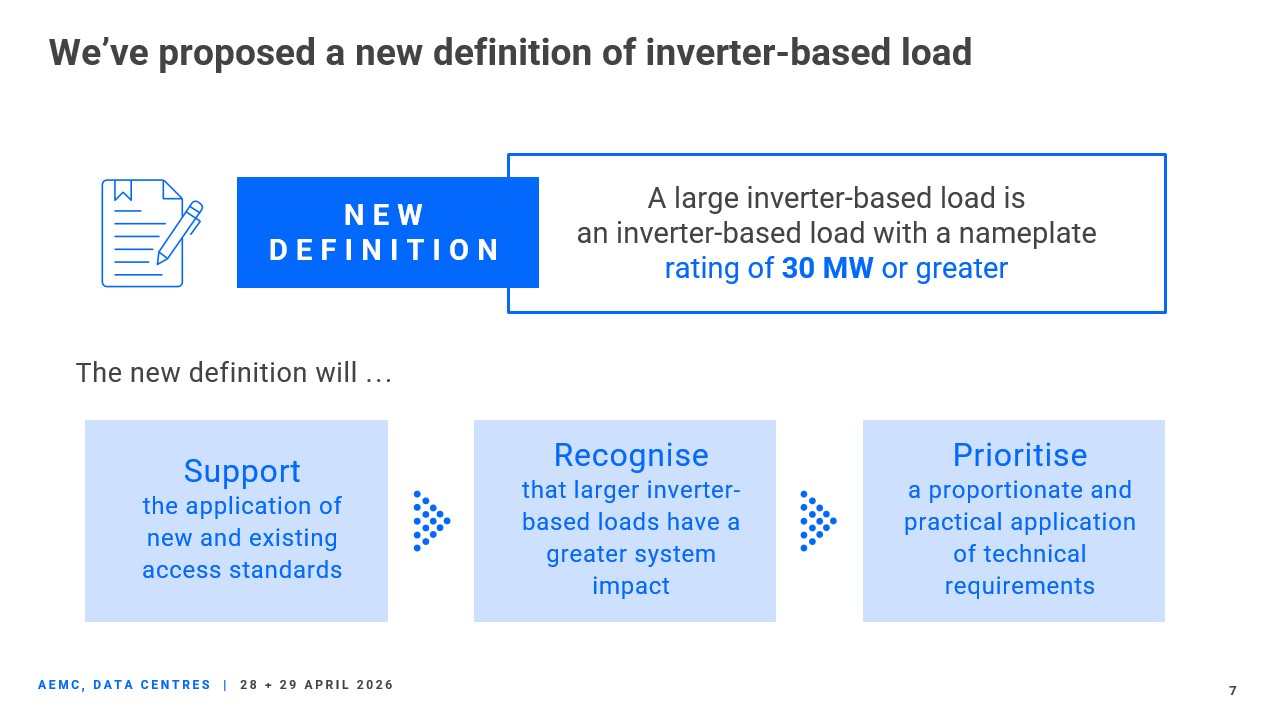
The Commission's central message is that the existing access standards are not well-suited to the technical characteristics or scale of large inverter-based loads, like data centres. As a result, the draft rule proposes updating and introducing new access standards that reflect modern system needs, while still supporting efficient investment and innovation.

To support the application of new and existing standards, the draft rule seeks to clearly define inverter-based loads in the National Electricity Rules (NER). 

This is important because their technical performance differs from that of other loads, and they require different regulation under the NER.
A clear regulatory framework

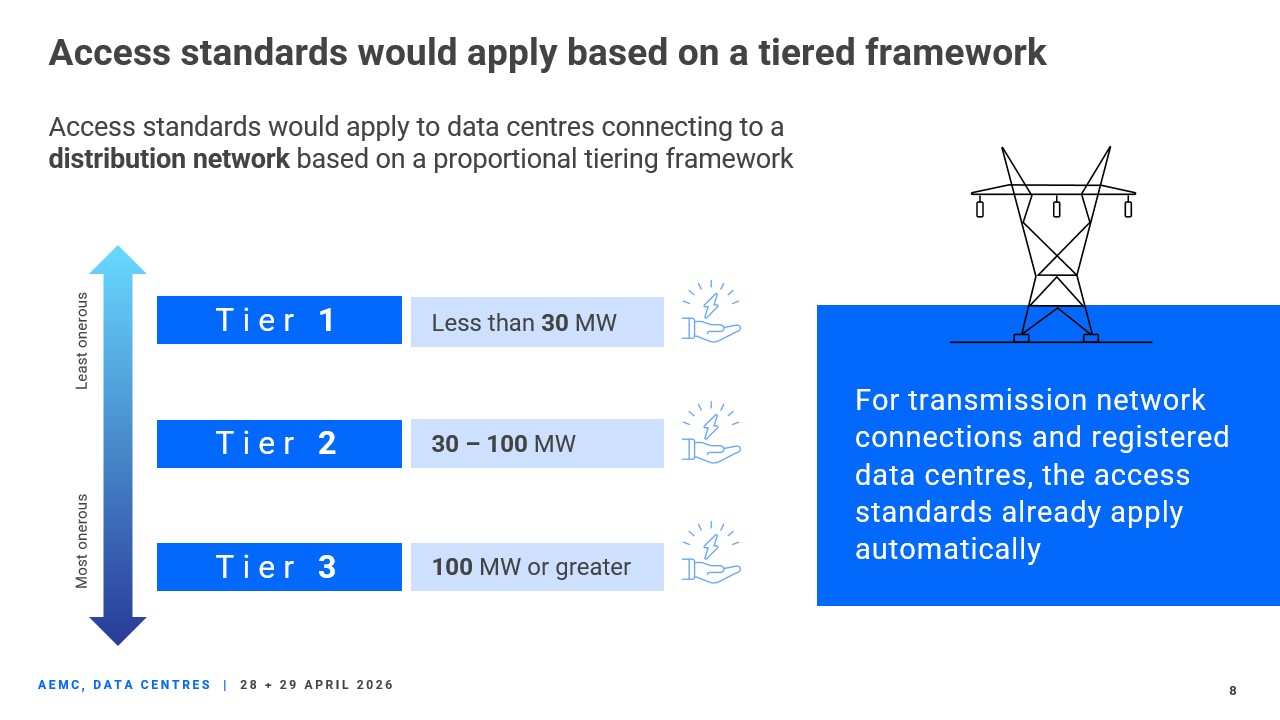
The draft rule also introduces a clear and transparent framework for classifying inverter-based loads.

This is important for connections to distribution networks where we are increasingly seeing significant new demand, including from data centres. 

While access standards already apply to inverter-based loads connecting at the transmission level, and to those that choose to register in the market, there has been no consistent framework for large, non-registered loads connecting at the distribution level.

The draft rule introduces a three-tiered classification framework. 

The intent here is proportionality. Not every load has the same impact on the power system. The connection standards applied to small loads should not be the same as those applied to larger loads that pose a greater risk to system security.

The proposed framework also addresses a growing issue in the NEM: AEMO has limited visibility of non-registered large inverter-based loads connecting at the distribution level, making it harder to plan and operate the system securely as their numbers grow.

Without a clear, fit-for-purpose definition of what constitutes a large inverter-based load, connection applicants, network service providers and system planners are left with uncertainty — about when technical requirements apply and how to design networks that remain secure as these loads increase. Providing that clarity is therefore a central objective of this rule change.

It is also important to understand that the proposed access standard reforms apply to data centres that connect directly via their UPS/inverter-based system. Where a data centre connects behind other plant, such as a battery, this is treated under the NER as an integrated resource system, for which different technical access standards apply. 

The application of technical access standards for loads (schedule 5.3) and integrated resource systems (schedule 5.2) under the NER should not be duplicative. 
Ensuring power system security 

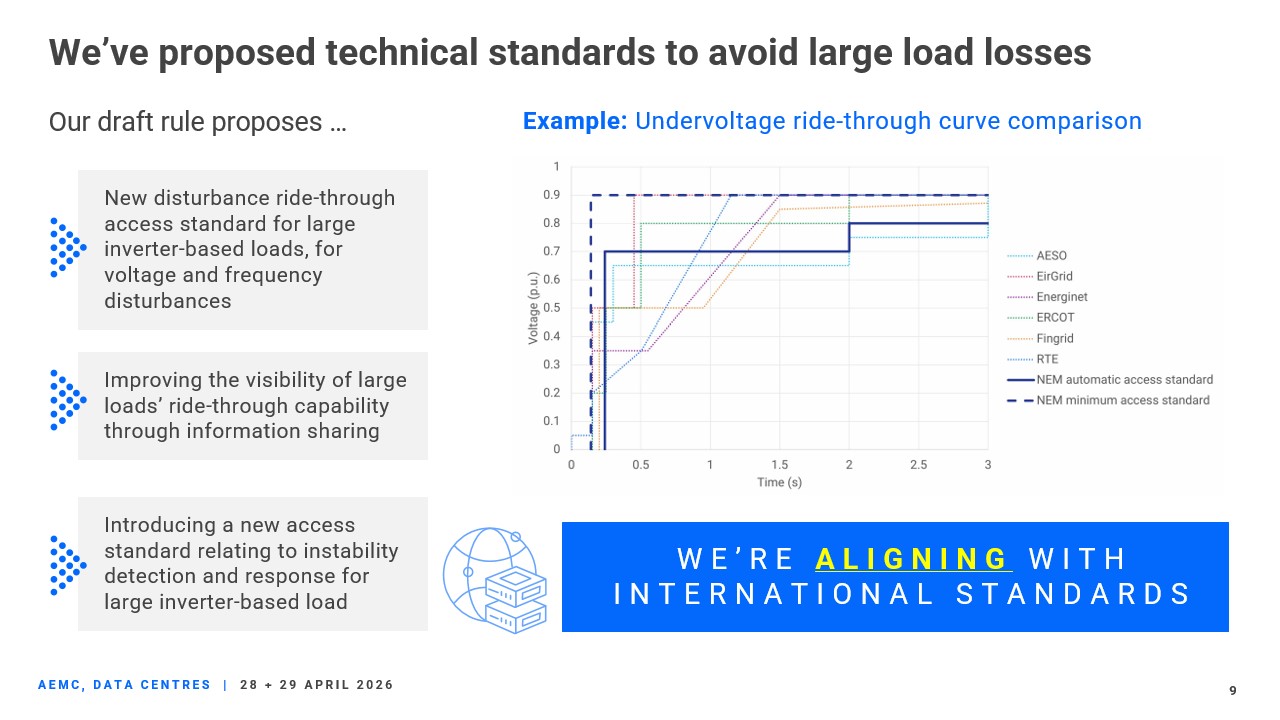
Another key focus of the draft determination is strengthening and introducing new technical requirements. These cover how large loads, like data centres, respond to credible disturbances, such as voltage or frequency events. The objective is to ensure they can ride through these disturbances or disconnect in a controlled manner when necessary. 

The intent is to reduce the risk that large loads exacerbate system events, particularly as their scale and concentration increase in parts of the network. We've learned from international experience that if we do not seek to reduce this risk, we could see cascading disconnections that result in outages, with the costs ultimately borne by consumers. 

Importantly, the draft rule recognises that these changes should not unnecessarily deter investment. Instead, the framework is designed to provide upfront clarity, reduce negotiation uncertainty, and support timely connection processes. 

Our approach is internationally aligned

The Commission has sought to align the proposed new access standards with those in comparable international jurisdictions. 

This should enable investors to leverage feasibility studies, grid-integration assumptions, and risk models developed elsewhere, thereby reducing technical and regulatory incompatibilities that could deter investment in the NEM. 

It should also enable investors to benefit from access to standardised OEM load equipment.

The objective is shorter procurement timeframes, reduced engineering hours, and lower equipment integration risk for the NEM. Those savings should flow directly into lower capex and faster commissioning for data centre developers, whilst ensuring system security is maintained. 

Summary of draft rule discussion

In summary, to fully realise the benefits data centres can bring, we need clear and predictable connection processes. The draft rule is an important step towards that objective. By introducing a clearer classification framework and defined expectations for access standards, it reduces ambiguity in the connections process.

For network service providers, this provides greater upfront clarity on technical connection requirements. For connecting parties, it creates a more predictable pathway, providing earlier certainty about what is required and the likely costs.

The result should be more streamlined connections.

Importantly, the new disturbance ride-through access standards for large loads, improved visibility of ride-through capability, and a new access standard for instability detection will help maintain a secure power system. 

The AEMC is currently consulting on the draft access standards rule, with submissions closing on 7 May.

We look forward to stakeholder submissions and will continue working closely with industry to refine the final design. 
Call to action

So, where does this leave us?

The path forward is clear, but it requires coordination:

Across jurisdictions. Across institutions. And across industry.

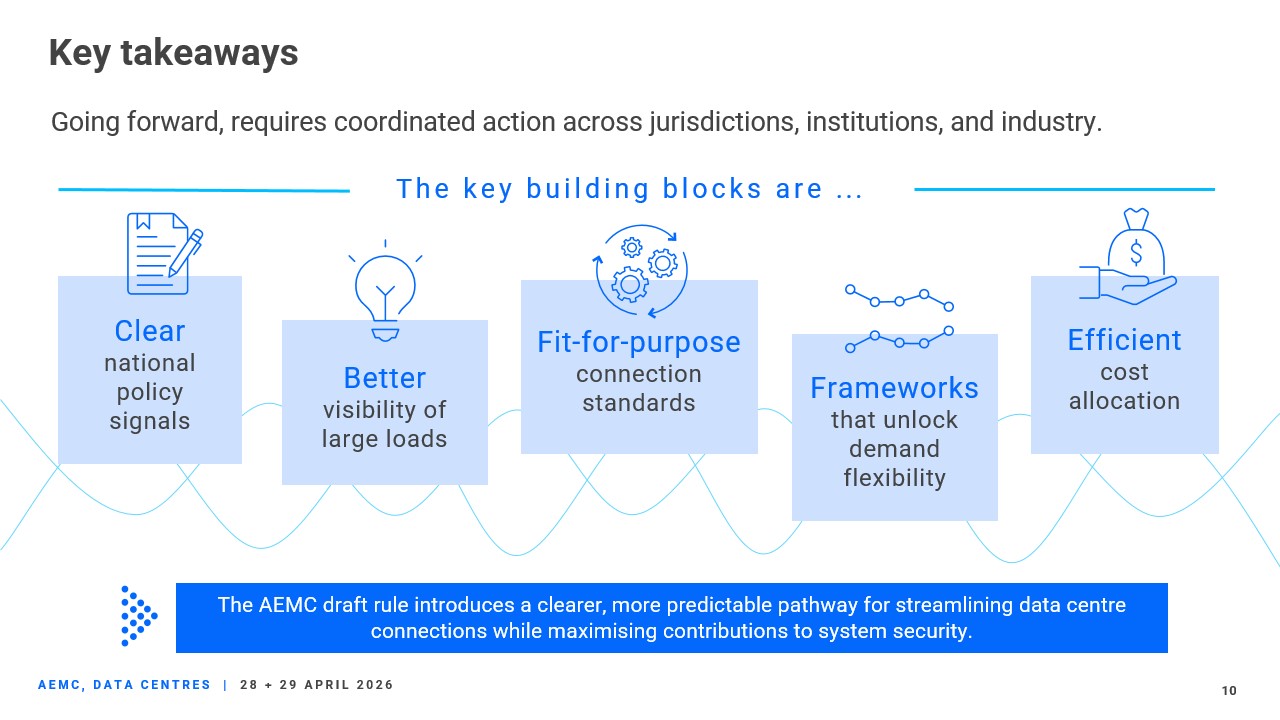
The key building blocks are:

  • clear national policy signals
  • fit-for-purpose connection standards
  • efficient cost allocation
  • better visibility of large loads, and 
  • frameworks that unlock demand flexibility.
     

If we get this right, the prize is significant.

We can enable the digital AI investment and economic growth Australia will benefit from, while keeping the system secure and affordable.

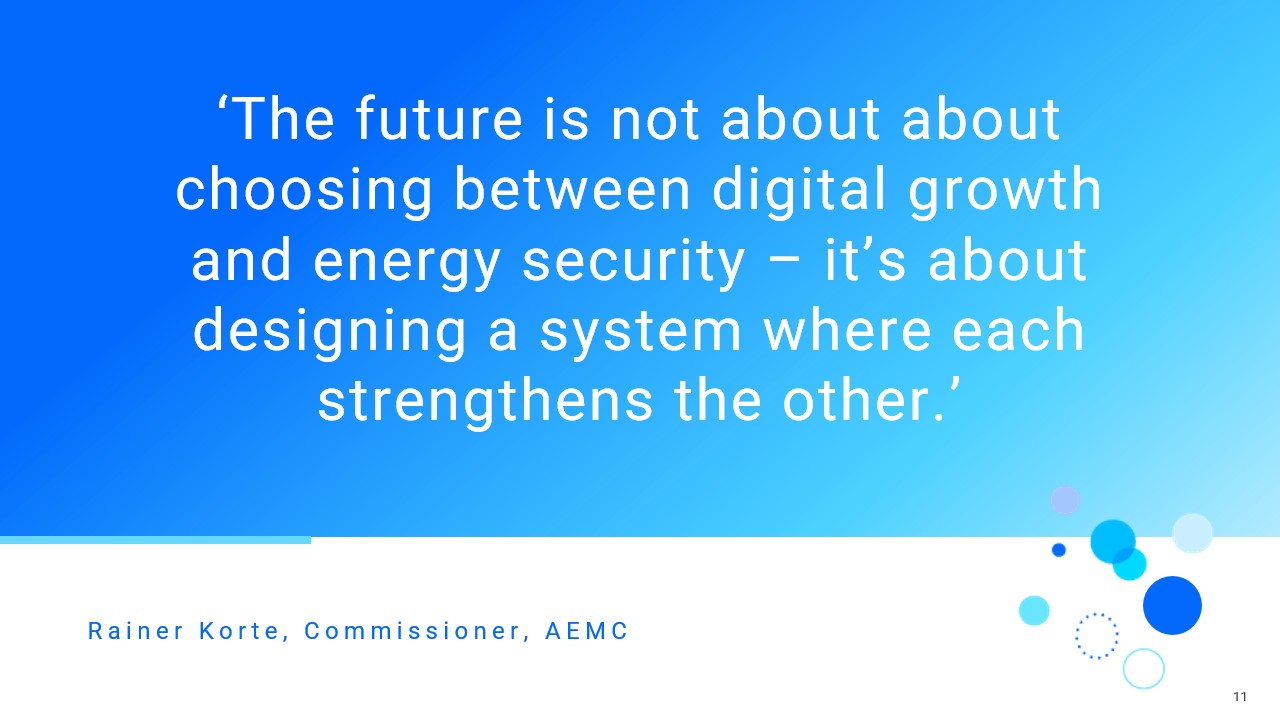
Ultimately, this is not a choice between digital growth and energy security. It's about designing a system where each strengthens the other.

If we align policy, regulation and networks effectively, data centres won't just be integrated into the grid, they will help power its future.

Thank you.
Energy security: Keeping the lights on through the energy transition (QLD)

26 February 2026

Rainer Korte, Commissioner

CEDA Energy Security Series

26 February 2026 - Pullman, King George Square, Brisbane

I would like to thank CEDA for the opportunity to speak with you today.

And I would like to acknowledge the traditional owners of the land on which we meet today – the Turrbal and Yuggera people – and pay my respects to Elders past and present.

When was the last time a blackout hit your neighbourhood?

The lights go out. The washing machine stops … and oh no! The Wi-Fi drops out.

Disaster.

You are suddenly reminded of how much your everyday life depends on a constant and reliable supply of electricity. 

Yet how often do you really think about it?

Recently, on Australia Day, I experienced a power blackout at home … ironically, while I was preparing for this talk. It was an exceptionally hot, record-breaking evening in Adelaide — over 40 degrees. The power was out for about 4 hours due to a fault on the distribution network.

Household or neighbourhood blackouts can be frustrating and annoying, and even life-threatening for some people in our community. Usually, these are fixed quickly. But on a larger scale, blackouts can have much more serious social and economic consequences. It's more than a few hours without Wi-Fi.

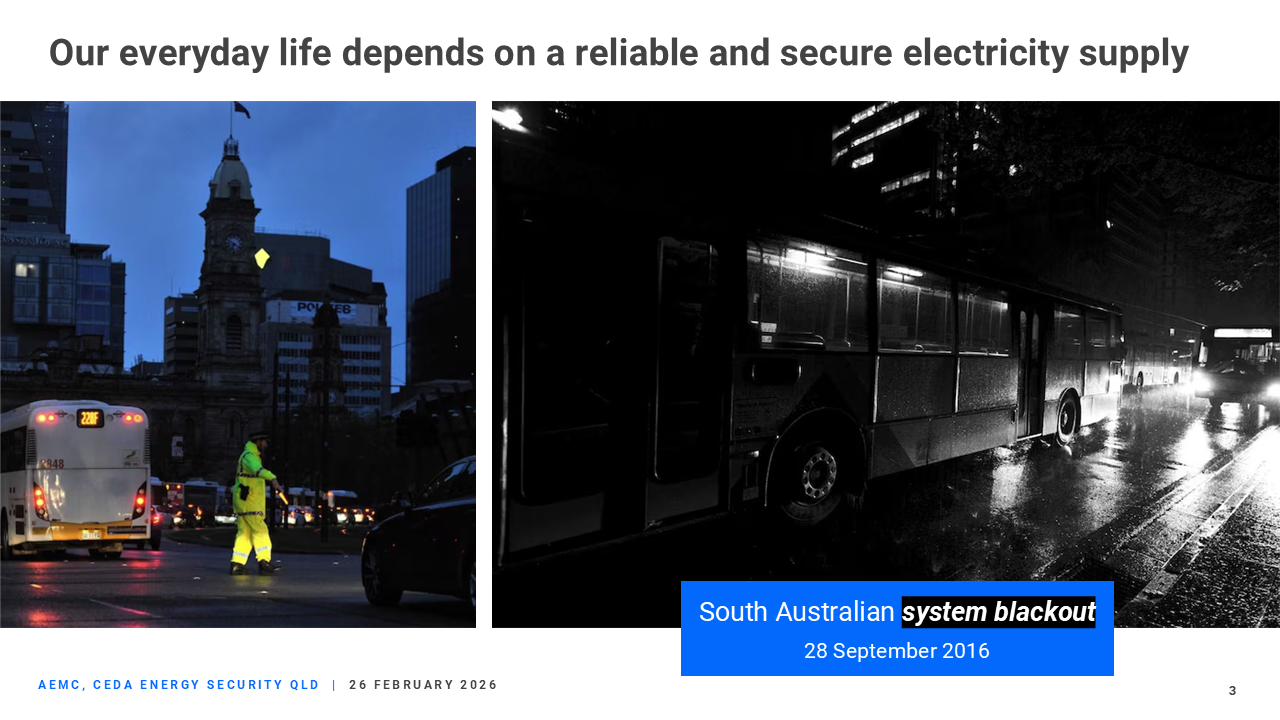
I lived through the South Australian statewide blackout in September 2016 and the subsequent investigations. 

Fortunately, in that case, approximately 80–90% of the metropolitan and suburban supply was restored within eight hours. However, regional supplies took up to a week to restore.  The blackout is reported to have caused economic losses of $450 to $500 million.

Blackouts remind us that energy security is essential for business continuity, economic prosperity, and safety.  It underpins our way of life. 

As you know, Australia is in the middle of the biggest structural transformation of our energy system in a century. 

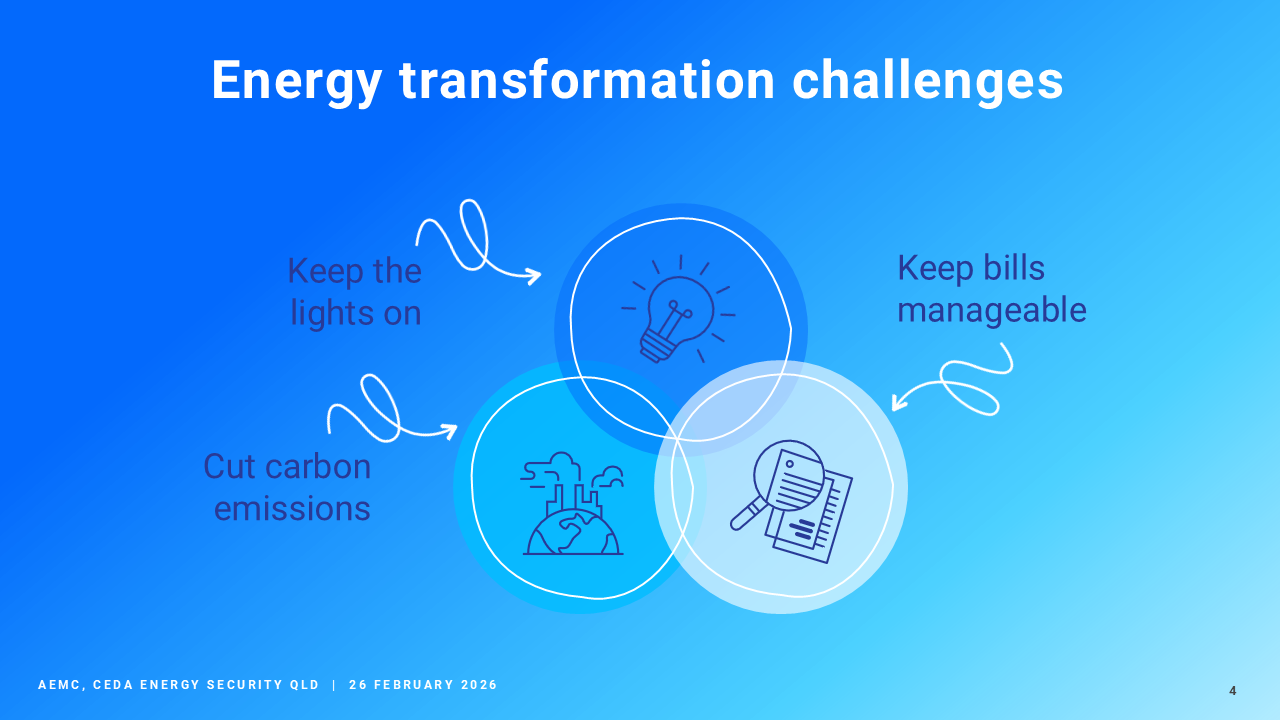
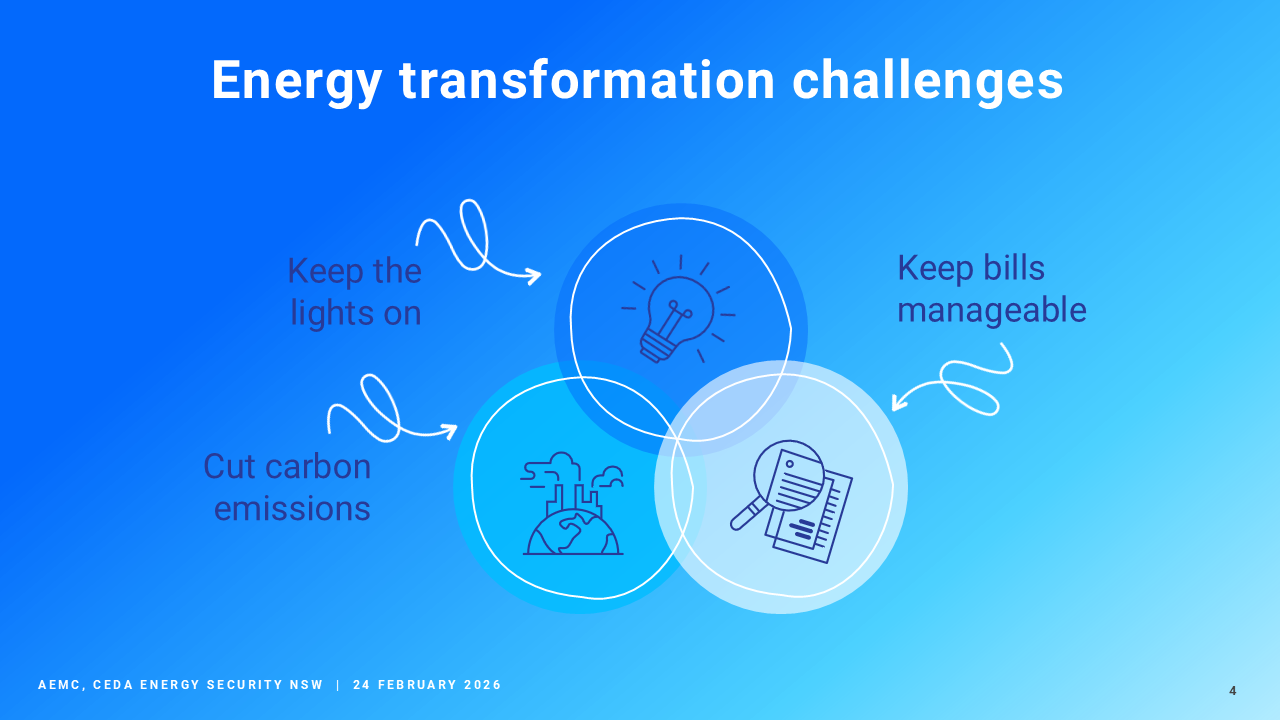
During the transformation, we are trying to keep the lights on, keep bills manageable, and cut carbon emissions – all at the same time. It's not easy!

At the Australian Energy Market Commission (AEMC), we are doing our part to address these challenges by implementing practical rule changes and providing sound advice to policymakers in line with our vision for a consumer-focused net zero energy system.

So, where are we up to in ensuring the lights do stay on through the energy transition?

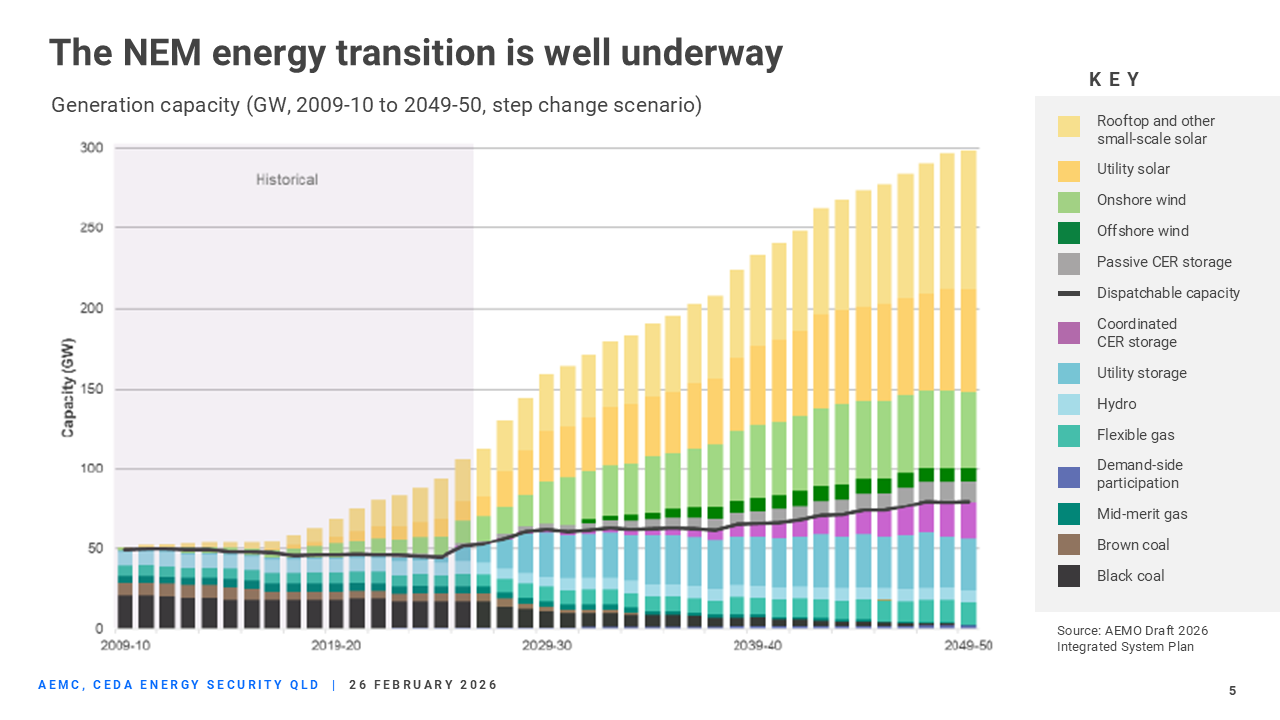
The energy transition is well underway

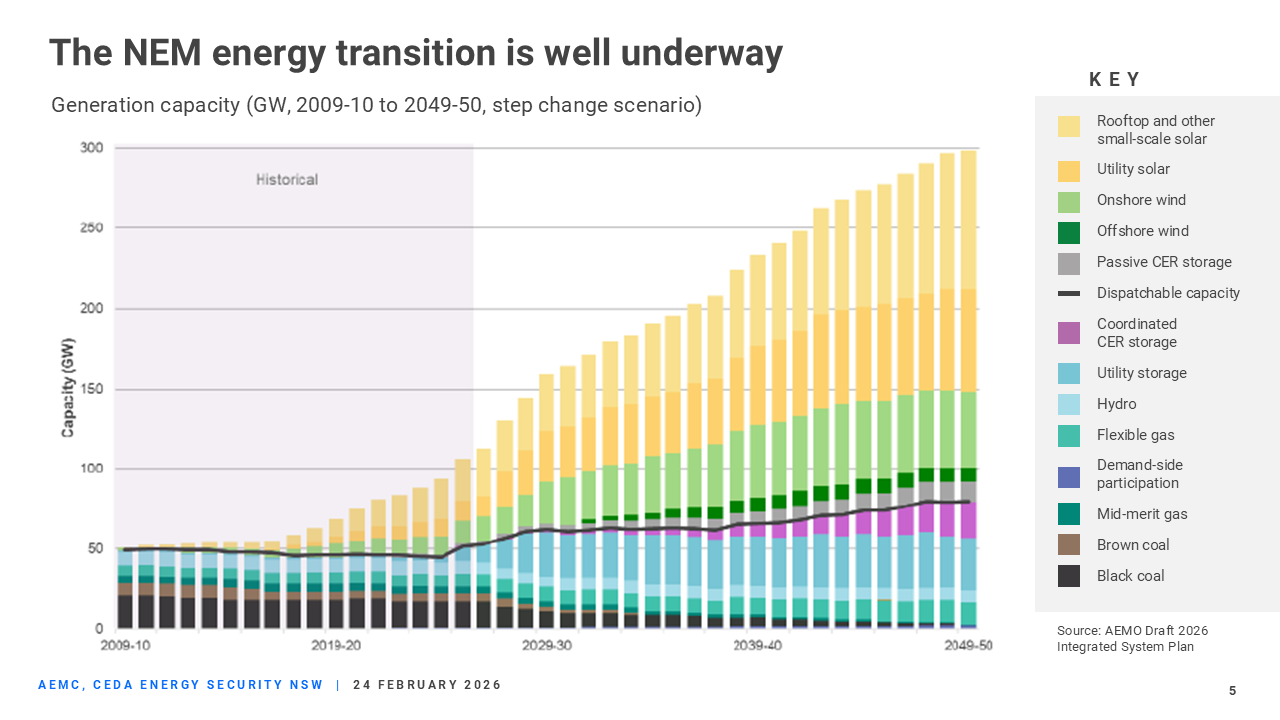
In the National Electricity Market (NEM), the energy transition is well underway.

Australia is increasingly relying on grid-scale and consumer renewable energy sources.

At the same time, our ageing coal fleet is retiring. 

Electricity demand is rising — driven by the electrification of industry, homes, and transport, and the growth of new energy-intensive industries, such as data centres.

Altogether, electricity consumption in the NEM is forecast to nearly double by 2050.

In December 2025, the Australian Energy Market Operator (AEMO) released its Draft 2026 Integrated System Plan (ISP). It reaffirms that renewable energy generation, connected by transmission and distribution, firmed with storage, and backed up by gas-powered generation, is the least-cost way forward for Australia.

The ISP Optimal Development Path (ODP) sets out the least-cost mix of grid-scale resources needed to replace retiring coal plants, accommodate the near-doubling of electricity demand, and meet government renewable energy and emissions targets, while accounting for the estimated growth in consumer energy resources (CER).

Under the central 'step-change' scenario, the Draft ISP projects the need for:

  • A fivefold increase in grid-scale wind and solar by 2050
  • A fourfold increase in distributed solar PV – noting that 1 in 3 households already have solar panels
  • An 18-fold increase in storage capacity
  • More flexible gas-powered generation to provide back-up power when needed
  • An additional 6,000 km of transmission 

The scale of investment required is huge. The annualised capital cost of the utility-scale generation, storage, transmission, and distribution infrastructure is estimated at $128 billion by 2050. 

Significant momentum is underway to deliver these investments, but challenges remain in doing so quickly enough.

Projects face delays due to protracted planning decisions and approvals, navigating supply chain constraints, securing social licence, and construction delays. 

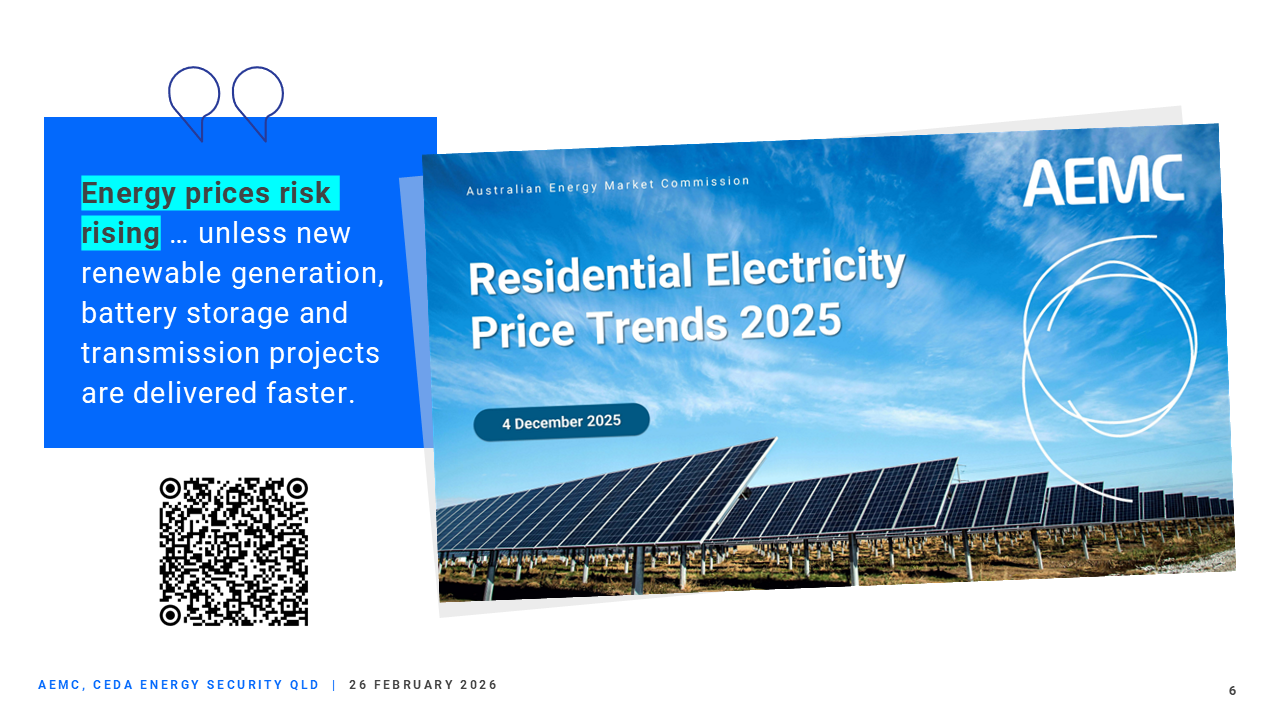
A key finding of the AEMC's latest Residential Electricity Price Trends report is that energy prices risk rising unless new renewable generation, battery storage and transmission projects are delivered faster than currently projected.

Government policies, such as the New South Wales Electricity Infrastructure Roadmap, are being implemented to ensure sufficient grid-scale infrastructure is in place before coal plant retirements, thereby reducing reliability and system security risk. 

In addition to providing a roadmap for the NEM energy transition, the ISP informs regulatory processes and jurisdictional planning programs.

The AEMC is conducting a review of the ISP framework in 2026 to ensure it remains fit for purpose and continues to guide billions of dollars in investment decisions with confidence.

Maintaining reliability and system security is critical 

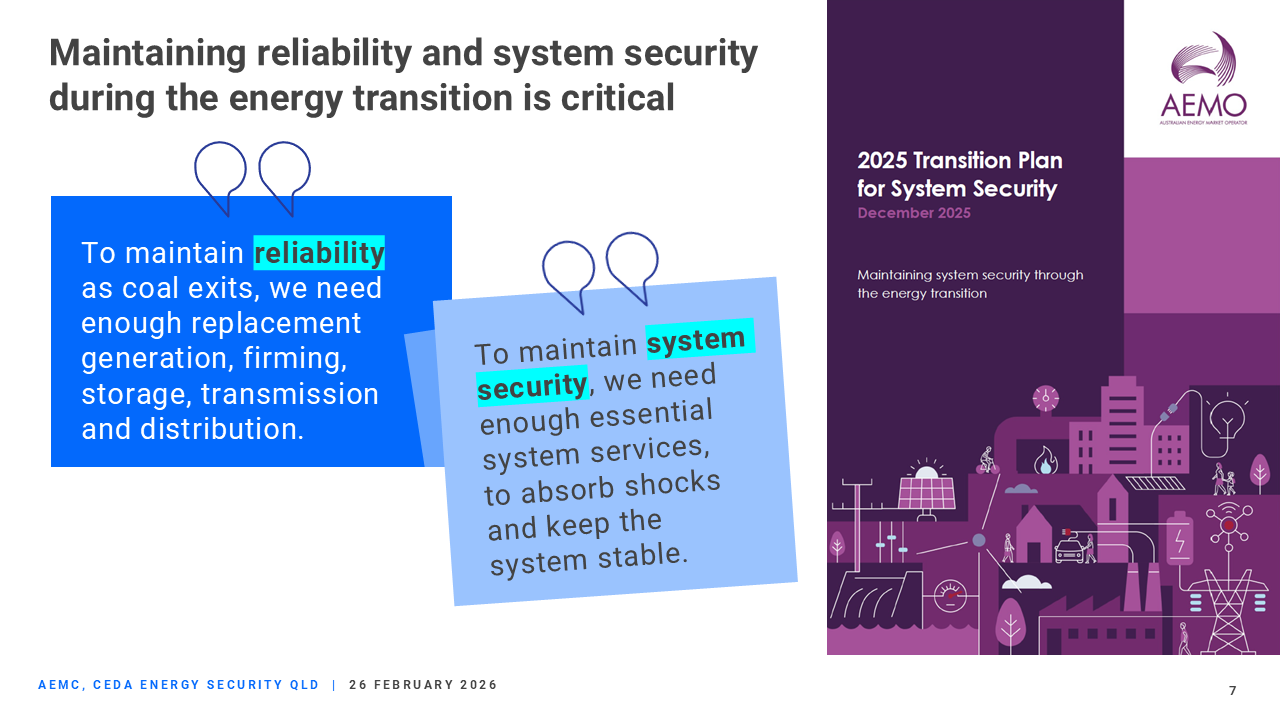
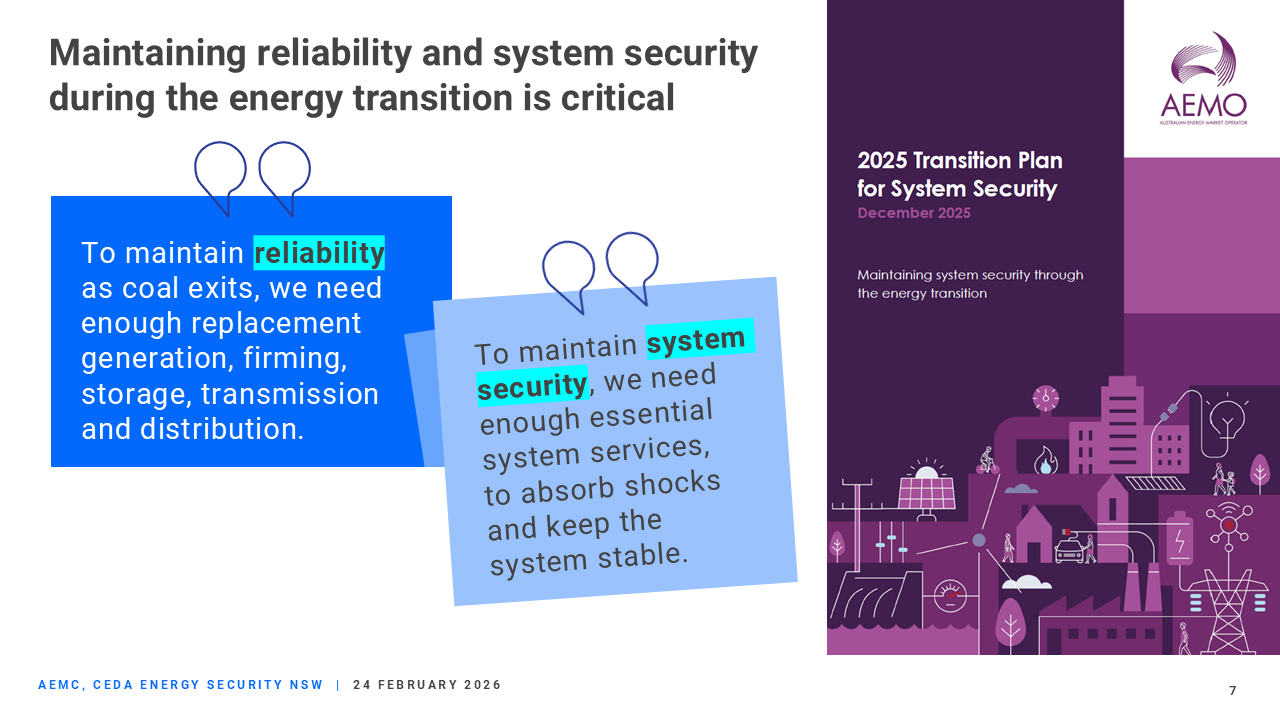
Maintaining reliability and system security during the energy transition is critical. 

As coal exits, we need enough replacement generation, firming, storage, transmission and distribution to maintain reliability.

To be secure, the power system must operate safely within its defined technical limits, withstand disturbances, and restart after a widespread outage, such as a statewide blackout.

To maintain system security, we need enough essential system services, such as inertia and system strength, to absorb shocks and keep the system stable.

Early investment in replacement resources is essential to mitigate the impacts of coal closures.

AEMO's Transition Plan for System Security, released in December, identifies emerging security gaps that require coordinated action by AEMO, governments, networks, and market participants to support the energy transition over the next 10 years.

The plan highlights one major unresolved issue for Queensland: managing system security under low-probability minimum system demand conditions. Implementing emergency backstop mechanisms to actively manage smaller PV installations when needed can help to address this issue.

Recent major reforms of the National Electricity Rules system security frameworks continue to be implemented and evolve.

The AEMC has received two rule-change proposals to enhance the existing frameworks. 

AEMO has proposed options to enable system strength and inertia shortfalls to be declared and managed more effectively, improve planning certainty, and adjust regulatory timeframes to better align resource entry and exit. 

The Australian Energy Council (AEC) and the Clean Energy Council (CEC) are seeking improved clarity and transparency in the security frameworks.

We plan to commence these rule changes next month.

AEMO is progressing the implementation of new transitional services introduced under recent regulatory reforms to support operability and help trial new technologies such as battery grid-forming (GFM) inverters to deliver essential system security services.

These new investments and reforms are needed to maintain system security ahead of coal exits. 

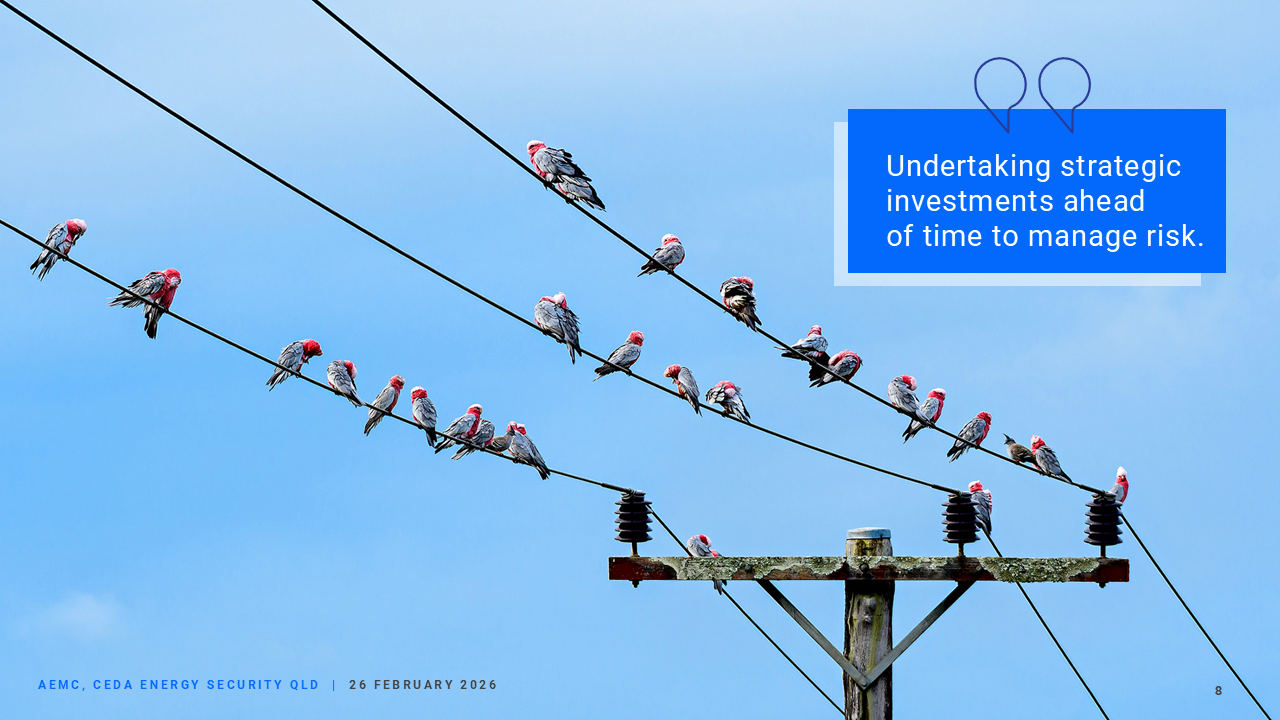
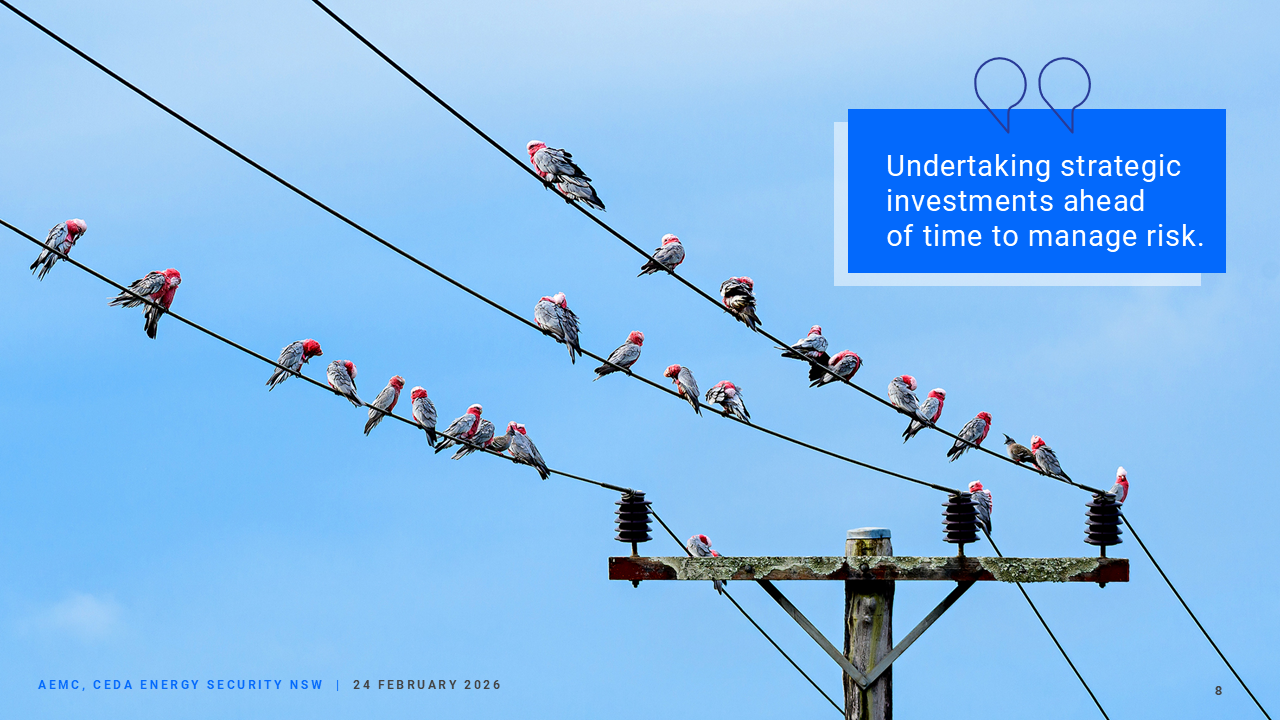
Undertaking strategic investments ahead of time to ensure the grid is ready for what's coming is better than trying to invest "just in time", as every delay increases risk to reliability and system security.

Consumer energy resources cut energy costs and improve resilience 

One of the most exciting – and challenging – parts of the energy transition is the rise of CER. 

Rooftop solar. Home batteries. Electric vehicles. Smart appliances.

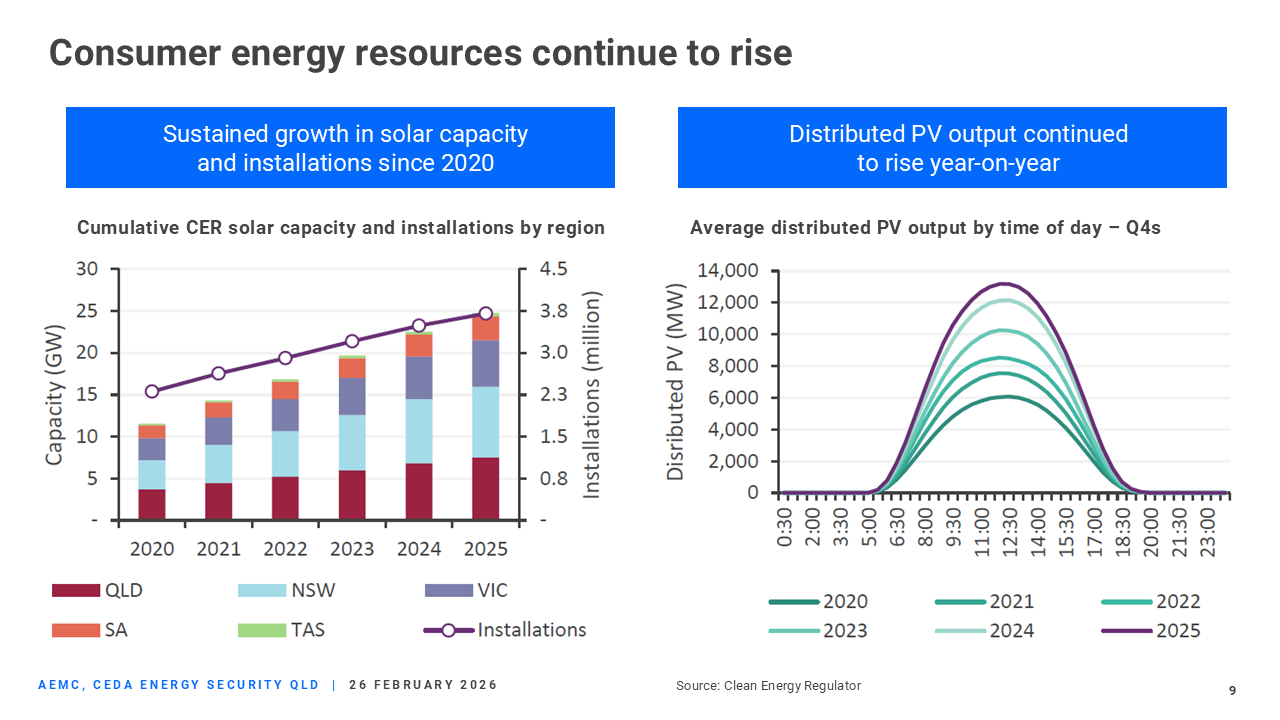
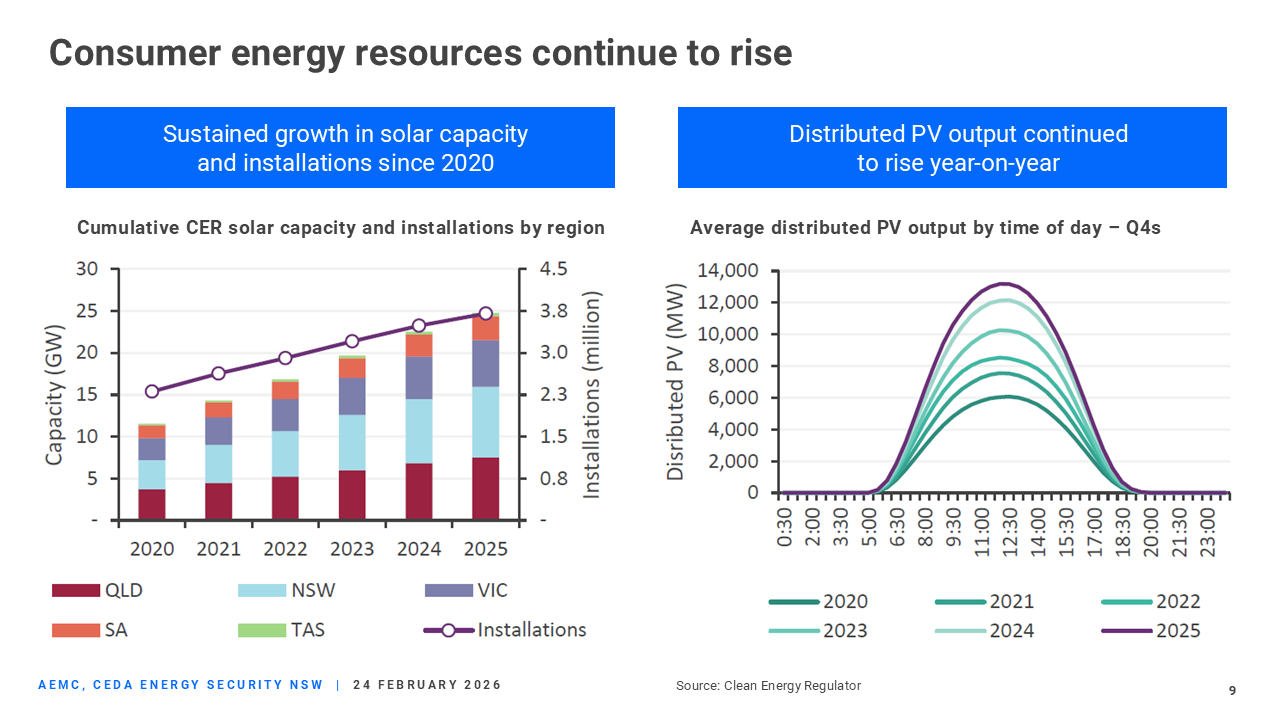
Queensland is approaching 1.2 million rooftop solar installations. 

The opportunity is enormous:

  • Households and businesses can lower bills by actively managing their home energy needs.
  • Local communities can build resilience through microgrids and backup capability.
  • Thousands of devices can be orchestrated to act as a virtual power plant.
  • The need for expensive centralised infrastructure can be reduced.

But there are also significant challenges:

  • Minimum grid demand is falling to levels that complicate system security. 
  • Voltage and local network management have become more complex.
  • System operators need visibility and a level of emergency control over millions of small devices. 
  • Market rules and incentives must evolve so CER leads to firmer aggregated capacity, not just unmanaged variability.

Australia is at the forefront of these challenges globally – there is no playbook for us to follow.

As CER uptake continues to grow, visibility and orchestration of CER resources become critical to maintaining system security and delivering the energy transition at the lowest cost. 

CER owners benefit directly from their investments and help lower system costs for all consumers.

Well integrated, CER could deliver up to $45 billion in net present value savings in avoided investment by 2050. Having the right regulatory frameworks in place is essential to realise these benefits.

The AEMC has been working hard to achieve this goal. For example, a recent reform, the integrating price-responsive resources rule change, will enable resource aggregators to participate in the wholesale electricity market, reducing system costs.

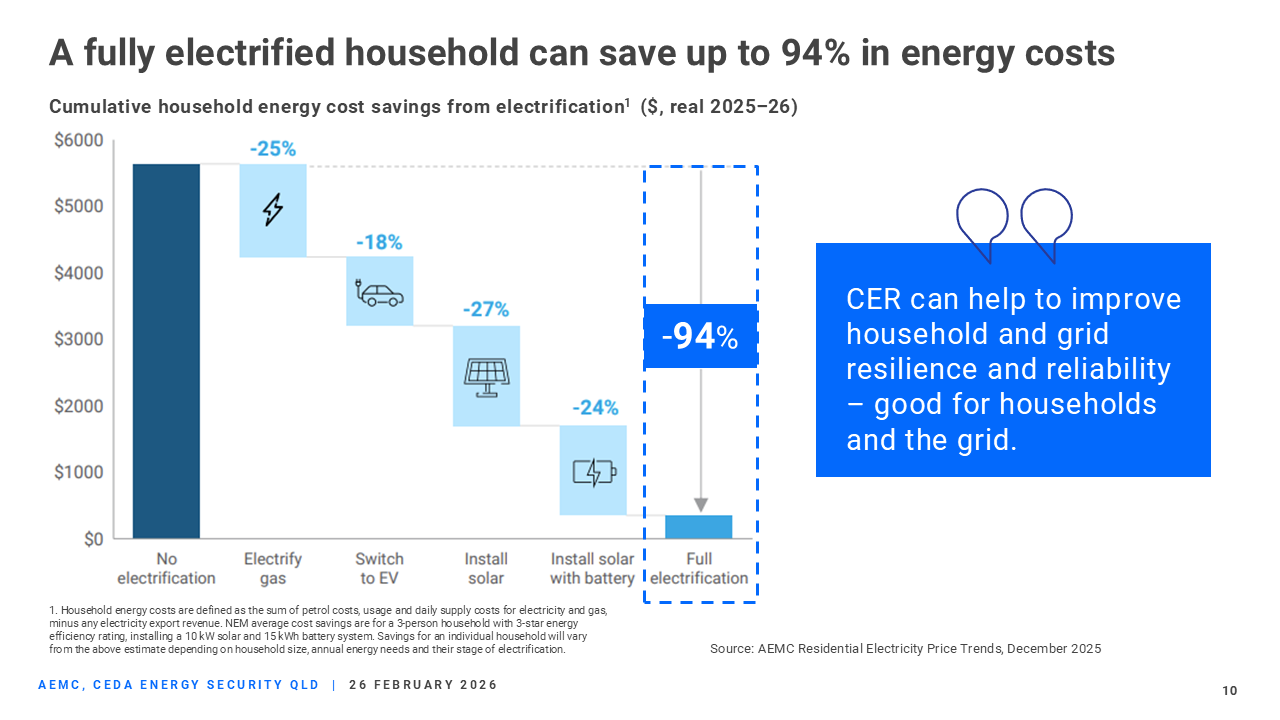
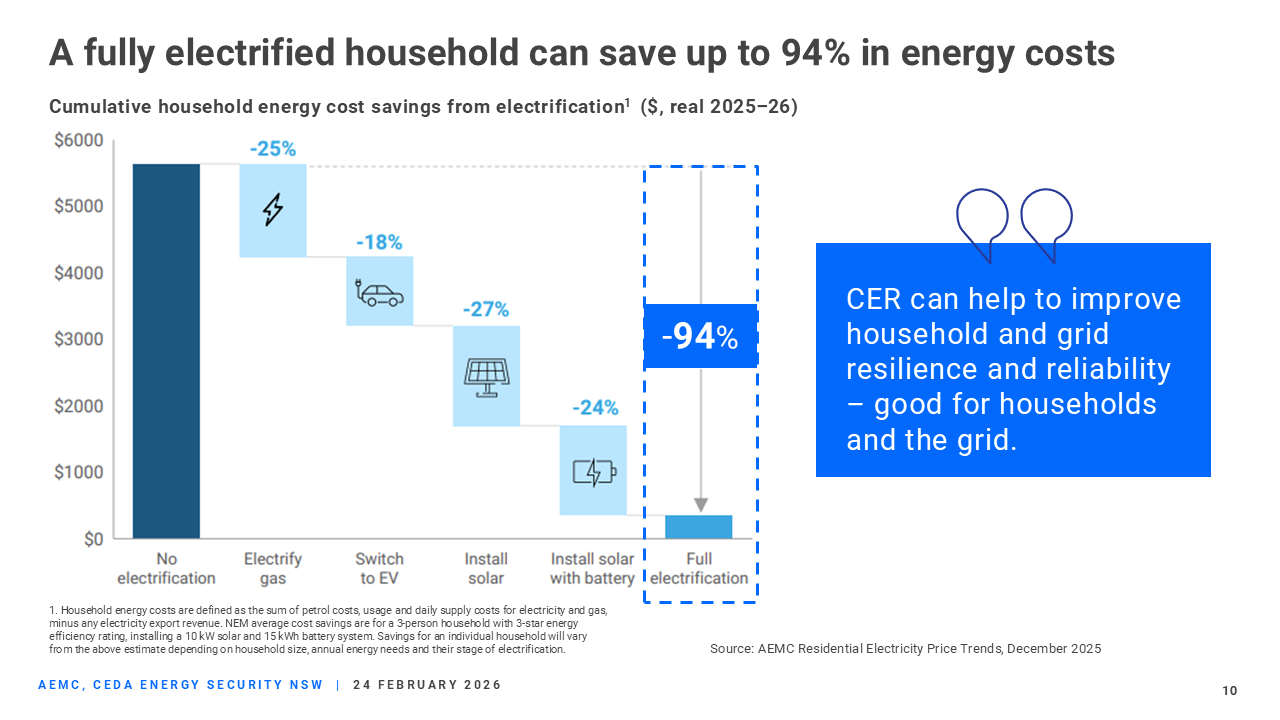
The AEMC's latest Residential Electricity Price Trends report shows that electrification is one of the most powerful tools that households have to cut their energy bills. Installing rooftop solar and a battery, switching to EVs, and replacing gas appliances with efficient electric ones can lower total household energy costs by up to 90 per cent per year.

CER can also help to improve household and grid resilience and reliability – so, good for households and the grid.

A fair energy transition 

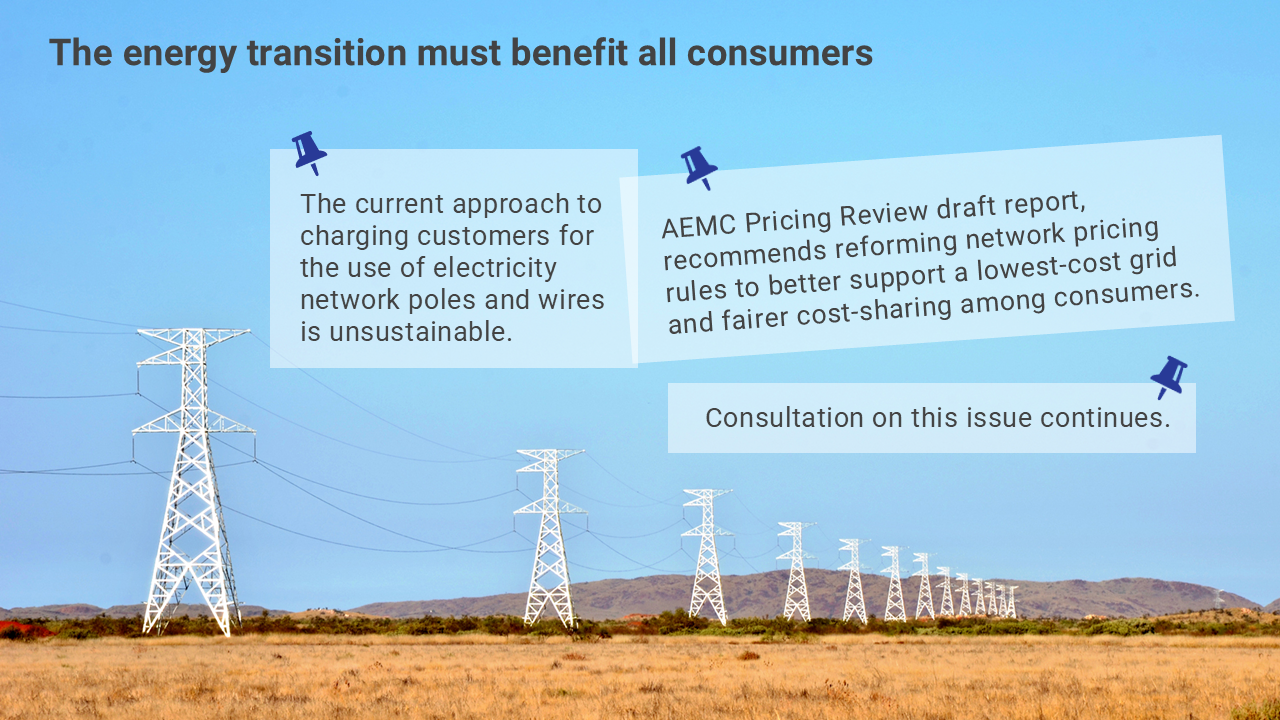
The energy transition must benefit all consumers.

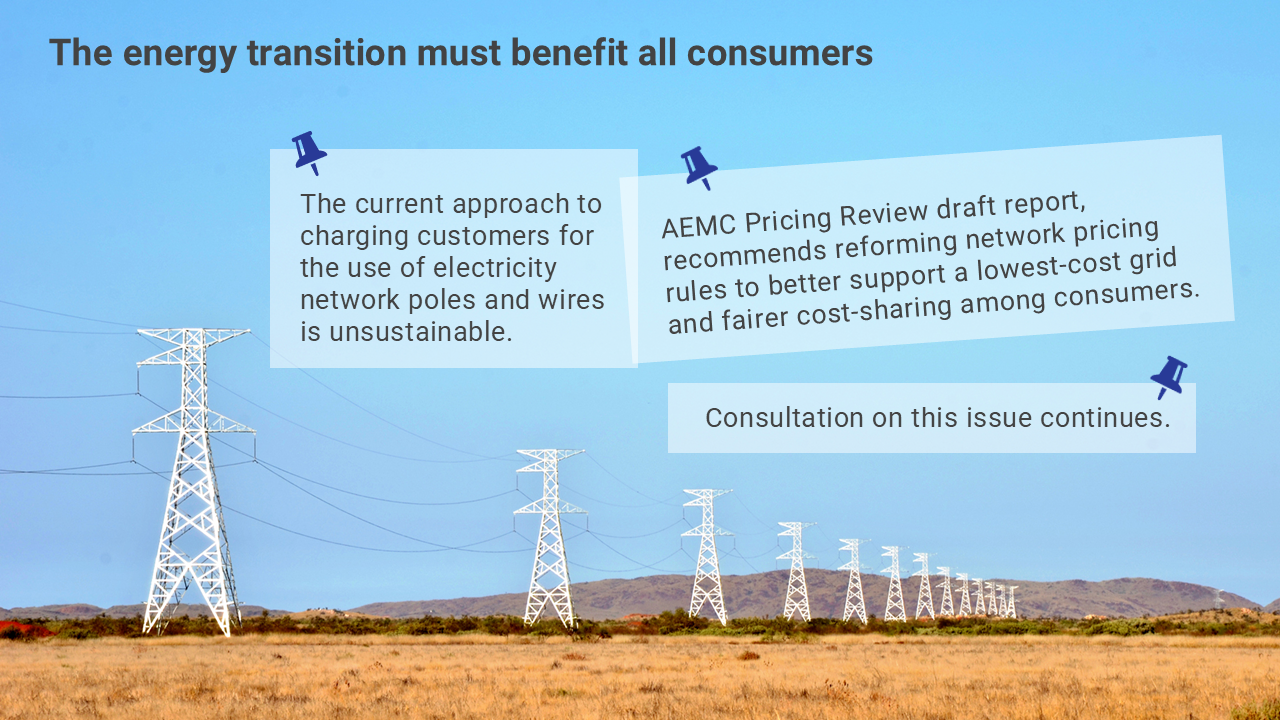
The current approach to charging customers for the use of electricity network poles and wires is contributing to adverse outcomes for some customers amid rapid CER growth.

This is because network costs are largely recovered through usage charges, and when customers install solar and batteries, their grid electricity usage drops, along with their contribution to network costs. But the cost of the grid remains the same.

As this trend continues, a shrinking pool of customers without CER is left to pay a growing share of network costs. 

How can this issue be addressed?

Currently, around 70 per cent of network costs are recovered via usage charges. 

If fixed charges are raised to recover a greater proportion of network costs, all customers, including those with CER, would experience a relatively small increase.

However, if usage charges are raised instead, customers without CER that rely solely on the grid would pay much more, particularly those who can't shift usage away from high-demand times.  

The current situation is unsustainable, and action is required to address rising equity concerns.

The AEMC Pricing Review draft report, released in December, recommends reforming network pricing rules to better support a lowest-cost grid and fairer cost-sharing among consumers. 

A distributional analysis is currently underway to assess the impact of the proposed reforms across different customer types, and we also continue to engage with stakeholders to inform this important work.

Is the energy transition delivering? 

So, is the energy transition delivering on the key indicators of reliability, cost, and sustainability?

AEMO recently released its energy dynamics report for the December quarter of 2025.

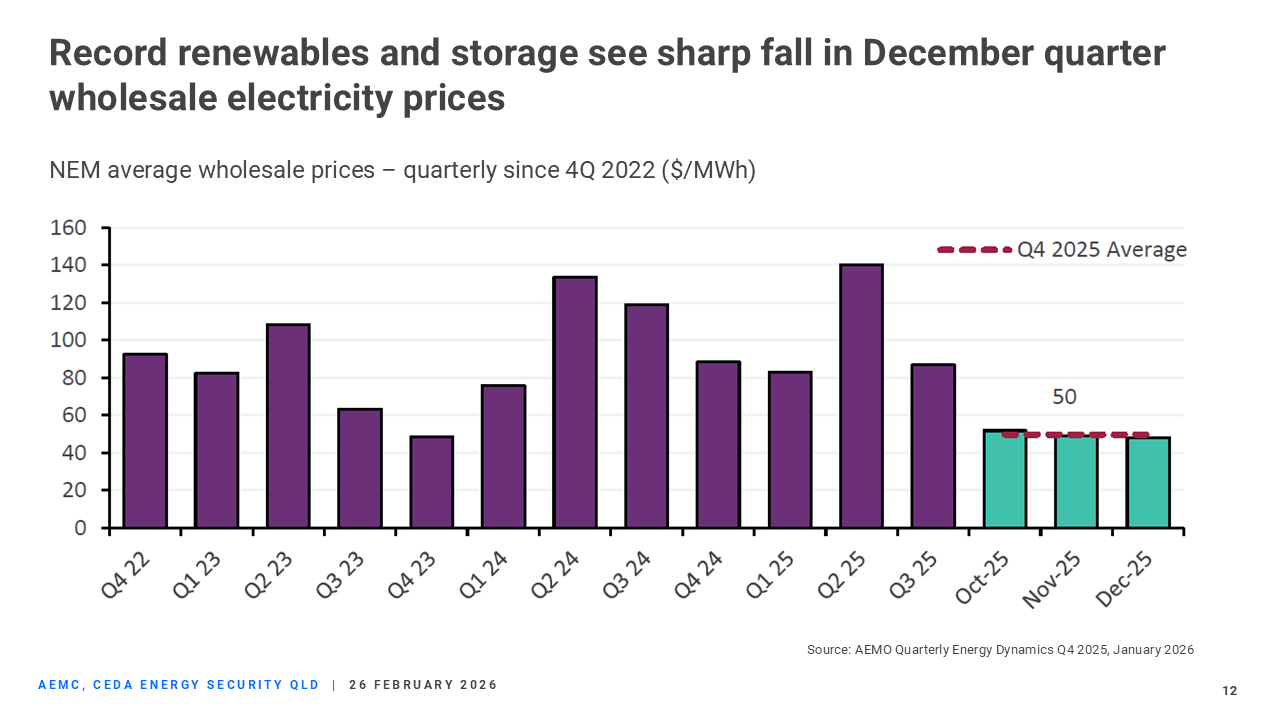
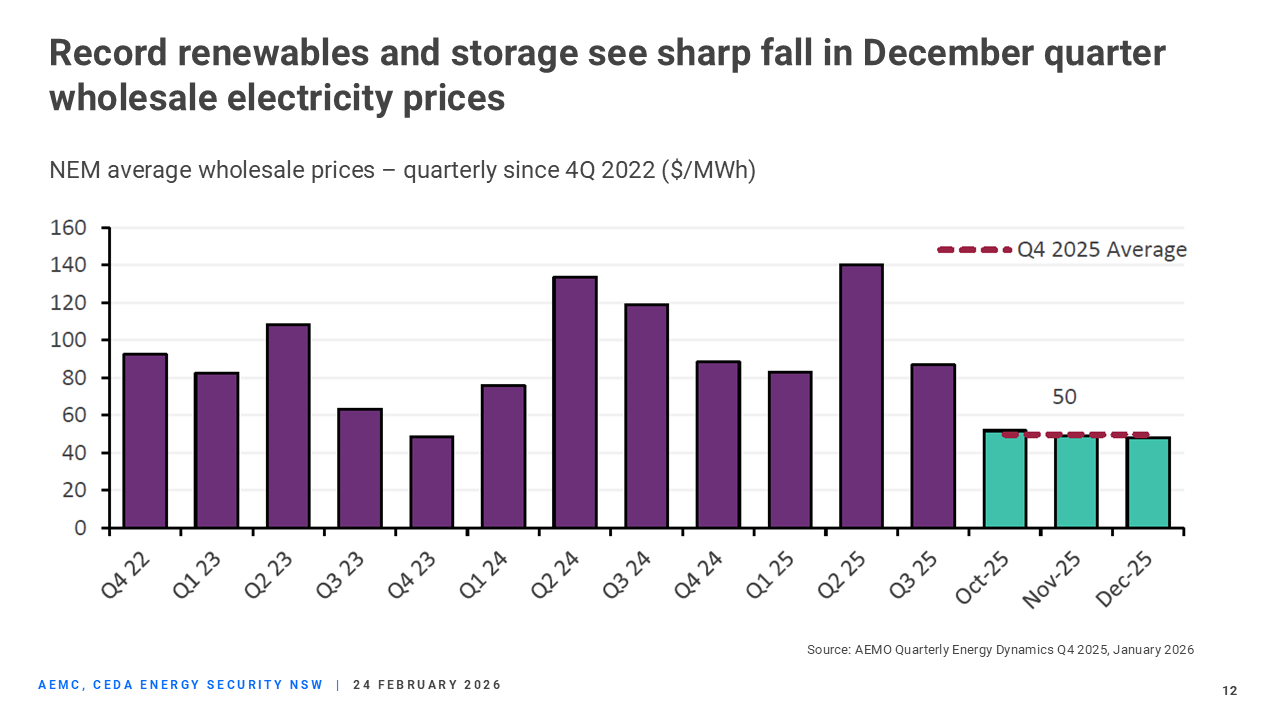
The December quarter has been described as a "landmark moment", with wholesale electricity prices falling sharply, renewables meeting half of all NEM demand for the first time, battery output surging, and coal generation hitting a new low.

Average wholesale electricity prices nearly halved – compared to a year earlier – driven by record renewables and storage output.

Coal-fired generation was down 4.6 per cent year on year, falling to an all-time quarterly low. Gas-fired generation dropped 27 per cent to its lowest levels for 25 years.

These are positive signs that we are heading in the right direction on cost and sustainability.

What about energy security? Reliability and system security are tested under system stress: hot nights, low wind, high demand, or during major disturbances.

On Australia Day, South Australia endured a stress test during an unprecedented heatwave, including the hottest night ever recorded in Adelaide. While there were local outages in the distribution network, such as the one impacting my household that I mentioned earlier, the system overall maintained reliability.

When the sun went down and batteries were discharged, peaking gas plants and diesel generators provided backup.

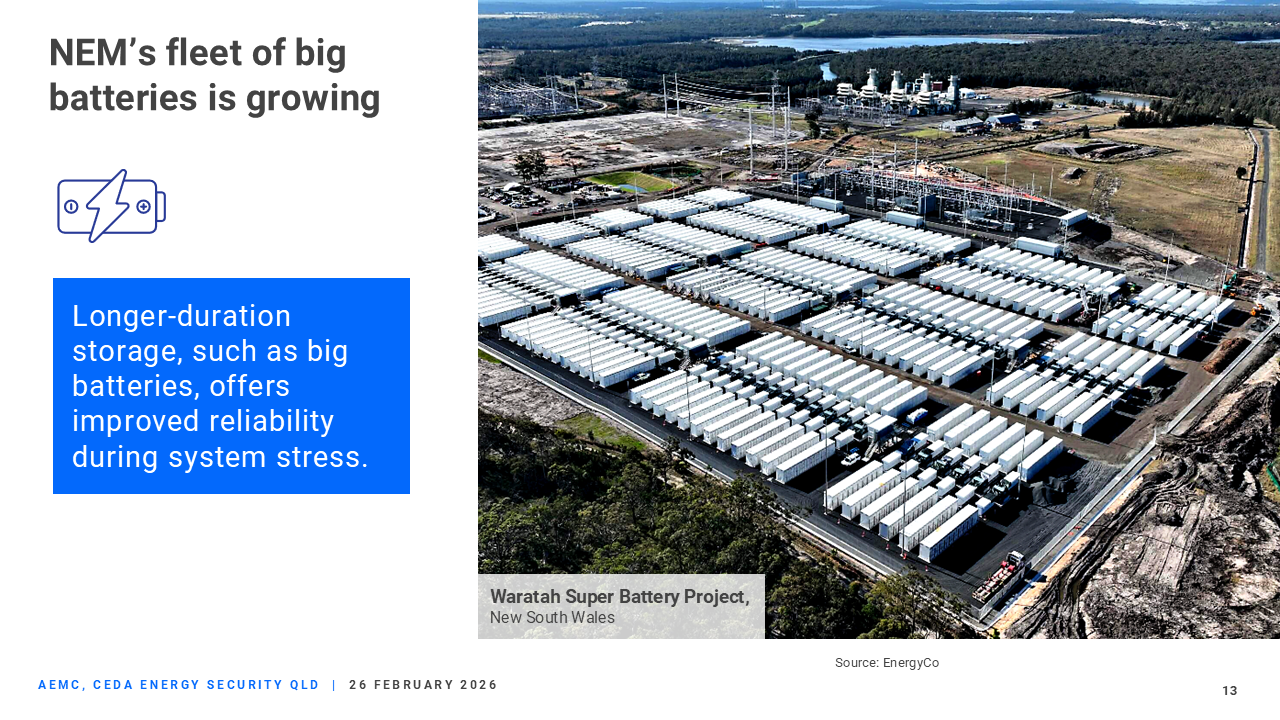
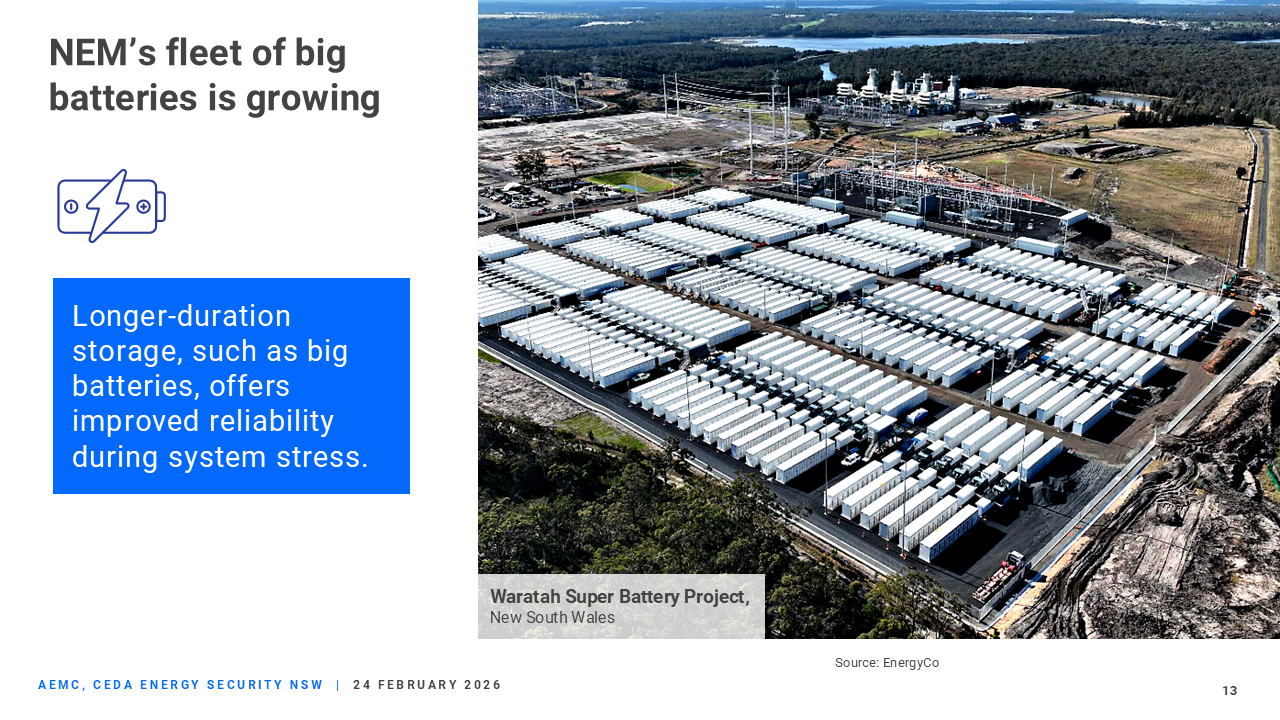
This highlights the need for more and longer-duration storage, as well as the value of the growing fleet of big battery projects underway in South Australia and across the NEM.

In 2025, Australia installed more battery storage per electricity consumption than any other country worldwide.  

Recent big battery operational announcements in Queensland include the 250 MW and 500 MWh Swanbank Battery near Ipswich and the Stanwell 300 MW and 600 MWh Tarong Battery. Batteries such as these help drive down power prices by storing renewable energy for use during peak demand. They can also provide essential services to support system security.

The Australia Day stress test in South Australia also highlights the important role of gas-fired generation in supporting the energy transition.

South Australia is a global leader in integrating wind and solar, with an average share of about 75 per cent over the last year. Wind and solar generation regularly exceed 100% of electricity demand, with rooftop solar alone exceeding 100% on multiple occasions.

South Australia is demonstrating what a high-renewables-penetration grid looks like and that it can be operated to deliver the reliability and system security we expect. 

So, we have a plan and are making real progress with the energy transition. Renewables are lifting their share, storage is scaling, and new essential system services are emerging. But we must accelerate investment, invest early, and maintain a clear line of sight to the essential system services that keep the system stable.

Energy security cannot be an afterthought — it is a key enabler of the energy transition. 

Every reform, every investment, every rule change is ultimately about ensuring that Australians can rely on their energy system, no matter how hot the night, how high the demand, or how fast technology evolves.

The energy transition is challenging, but it is achievable. And if we get it right, we will deliver a system that is not only secure but also the lowest-cost, lowest-emissions, and equipped to support the industries and communities of the future.

Thank you.
Energy security: Keeping the lights on through the energy transition (NSW)

24 February 2026

Rainer Korte, Commissioner

CEDA Energy Security Series

24 February 2026 - Parliament House NSW

Good afternoon, everyone.

I would like to thank CEDA for the opportunity to speak with you today.

And I would like to acknowledge the traditional owners of the land on which we meet today – the Gadigal people of the Eora nation – and pay my respects to Elders past and present.

When was the last time a blackout hit your neighbourhood?

The lights go out. The washing machine stops … and oh no! The Wi-Fi drops out.

Disaster.

You are suddenly reminded of how much your everyday life depends on a constant and reliable supply of electricity. 

Yet how often do you really think about it?

Recently, on Australia Day, I experienced a power blackout at home … ironically, while I was preparing for this talk. It was an exceptionally hot, record-breaking evening in Adelaide — over 40 degrees. The power was out for about four hours due to overloaded distribution equipment.

Household or neighbourhood blackouts can be frustrating and annoying, and even life-threatening for some people in our community. Usually, these are fixed quickly. But on a larger scale, blackouts can have much more serious social and economic consequences. It's more than a few hours of no Wi-Fi.

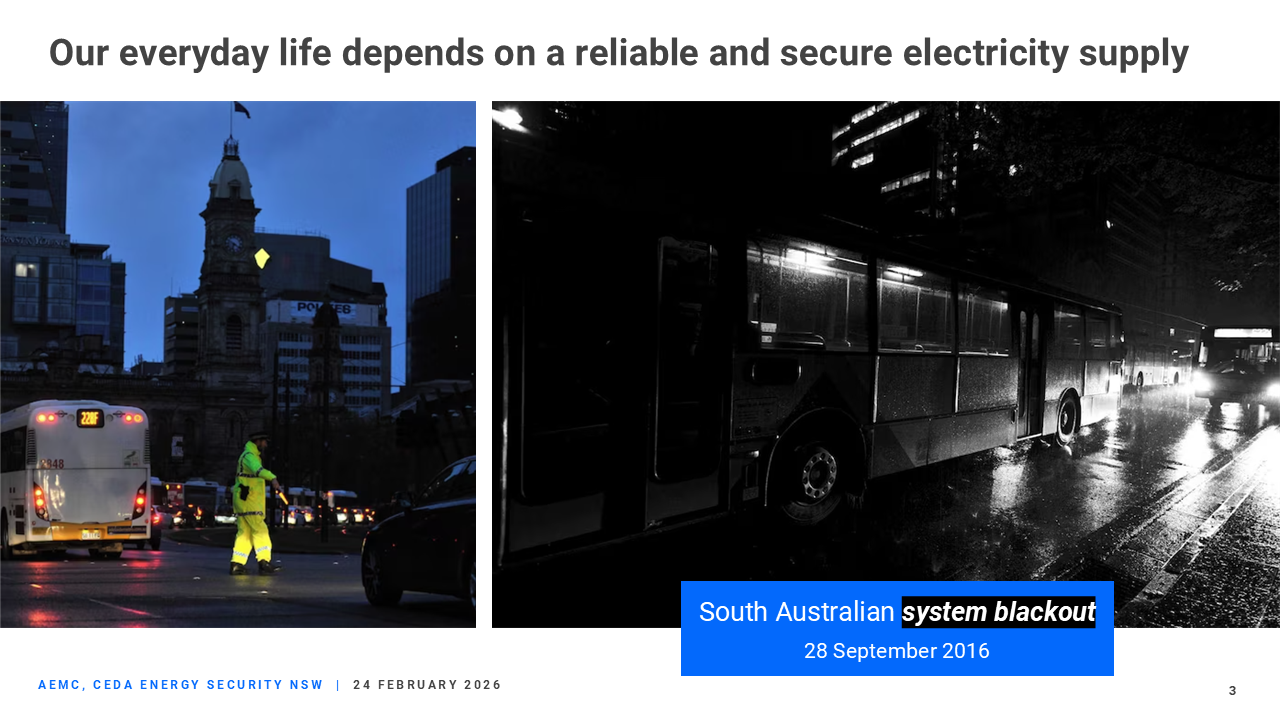
I lived through the South Australian statewide blackout in September 2016 and the subsequent investigations. 

Fortunately, in that case, approximately 80–90% of the metropolitan and suburban supply was restored within eight hours. However, regional supplies took up to a week to restore.  The blackout is reported to have caused economic losses of $450 to $500 million.

Blackouts remind us that energy security is essential for business continuity, economic prosperity, and safety.  It underpins our way of life. 

As you know, Australia is in the middle of the biggest structural transformation of our energy system in a century. 

During the transformation, we are trying to keep the lights on, keep bills manageable, and cut carbon emissions – all at the same time. It's not easy!

At the Australian Energy Market Commission (AEMC), we are doing our part to address these challenges by implementing practical rule changes and providing sound advice to policymakers in line with our vision for a consumer-focused net zero energy system.

So, where are we up to in ensuring the lights do stay on through the energy transition?

The energy transition is well underway 

In the National Electricity Market (NEM), the energy transition is well underway.

Australia is increasingly relying on grid-scale and consumer renewable energy sources.

At the same time, our ageing coal fleet is retiring. 

Electricity demand is rising — driven by the electrification of industry, homes, and transport, and the growth of new energy-intensive industries, such as data centres.

Altogether, electricity consumption in the NEM is forecast to nearly double by 2050.

In December 2025, the Australian Energy Market Operator (AEMO) released its Draft 2026 Integrated System Plan (ISP). It reaffirms that renewable energy generation, connected by transmission and distribution, firmed with storage, and backed up by gas-powered generation, is the least-cost way forward for Australia.

The ISP Optimal Development Path (ODP) sets out the least-cost mix of grid-scale resources needed to replace retiring coal plants, accommodate the near-doubling of electricity demand, and meet government renewable energy and emissions targets, while accounting for the estimated growth in consumer energy resources (CER).

Under the central 'step-change' scenario, the Draft ISP projects the need for:

  • a fivefold increase in grid-scale wind and solar by 2050
  • a fourfold increase in distributed solar PV – noting that 1 in 3 households already have solar panels
  • an 18-fold increase in storage capacity
  • more flexible gas-powered generation to provide back-up power when needed
  • an additional 6,000 km of transmission. 

The scale of investment required is huge. The annualised capital cost of the utility-scale generation, storage, transmission, and distribution infrastructure is estimated at $128 billion by 2050. 

Significant momentum is underway to deliver these investments, but challenges remain in doing so quickly enough.

Projects face delays due to protracted planning decisions and approvals, navigating supply chain constraints, securing social licence, and construction delays. 

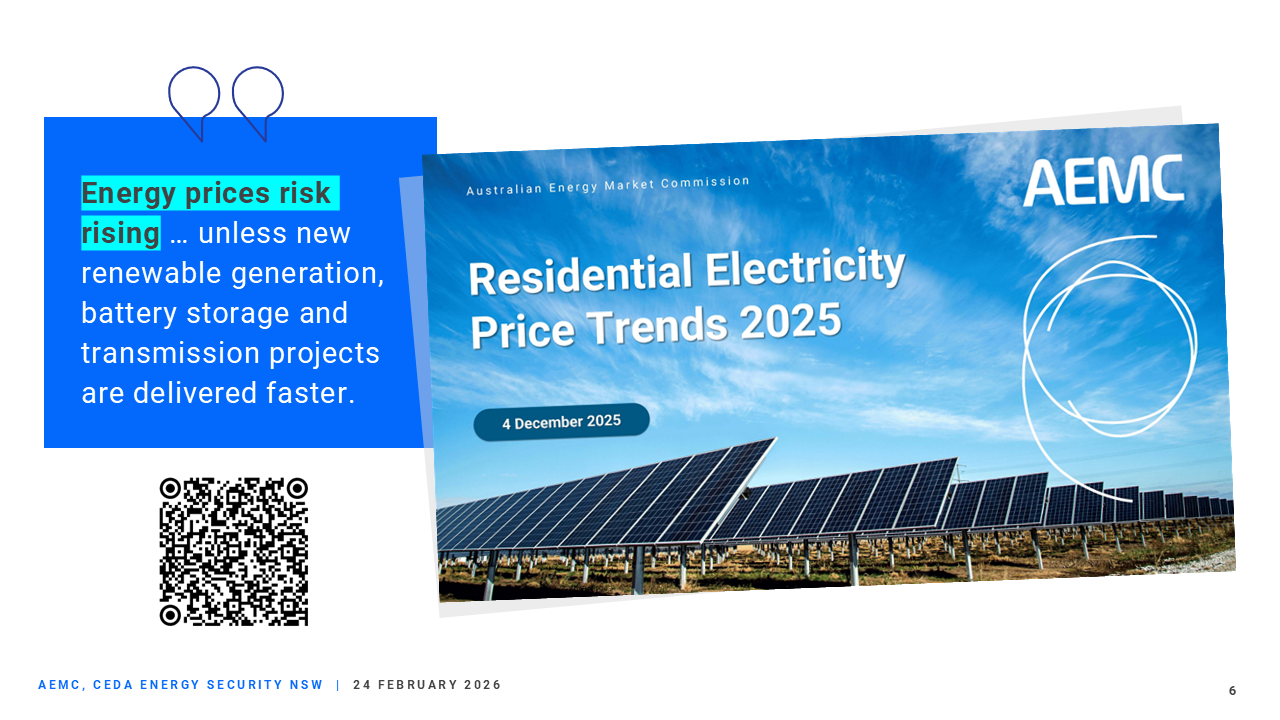
A key finding of the AEMC's latest Residential Electricity Price Trends report is that energy prices risk rising unless new renewable generation, battery storage and transmission projects are delivered faster than currently projected.

Government policies, such as the New South Wales Electricity Infrastructure Roadmap, are being implemented to ensure sufficient grid-scale infrastructure is in place before coal plant retirements, thereby reducing reliability and system security risk. 

In addition to providing a roadmap for the NEM energy transition, the ISP informs regulatory processes and jurisdictional planning programs.

The AEMC is conducting a review of the ISP framework in 2026 to ensure it remains fit for purpose and continues to guide billions of dollars in investment decisions with confidence.

Maintaining reliability and system security is critical 

Maintaining reliability and system security during the energy transition is critical. 

As coal exits, we need enough replacement generation, firming, storage, transmission and distribution to maintain reliability.

To be secure, the power system must operate safely within its defined technical limits, withstand disturbances, and restart after a widespread outage, such as a statewide blackout.

To maintain system security, we need enough essential system services, such as inertia and system strength, to absorb shocks and keep the system stable.

Early investment in replacement resources is essential to mitigate the impacts of coal closures.

AEMO's Transition Plan for System Security, released in December, identifies emerging security gaps that require coordinated action by AEMO, governments, networks, and market participants to support the energy transition over the next 10 years.

The plan highlights one major unresolved issue for NSW: assets flagged to meet system strength requirements before Eraring Power Station closes are not scheduled to be operational before its (previously) announced 19 August 2027 retirement date.

However, Origin Energy has now announced that it will extend Eraring's operation to 30 April 2029. This reduces system security risk by providing more time to deliver new replacement energy infrastructure and essential system services.

Recent major reforms of the National Electricity Rules system security frameworks continue to be implemented and evolve.

The AEMC has received two rule-change proposals to enhance the existing frameworks. 

AEMO has proposed options to enable system strength and inertia shortfalls to be declared and managed more effectively, improve planning certainty, and adjust regulatory timeframes to better align resource entry and exit. 

The Australian Energy Council (AEC) and the Clean Energy Council (CEC) are seeking improved clarity and transparency in the security frameworks.

We plan to commence these rule changes next month.

AEMO is progressing the implementation of new transitional services introduced under recent regulatory reforms to support operability and help trial new technologies such as battery grid-forming (GFM) inverters to deliver essential system security services.

These new investments and reforms are needed to maintain system security ahead of coal exits. 

Undertaking strategic investments ahead of time to ensure the grid is ready for what's coming is better than trying to invest "just in time", as every delay increases risk to reliability and system security.

Consumer energy resources cut energy costs and improve resilience 

One of the most exciting – and challenging – parts of the energy transition is the rise of CER. 

Rooftop solar. Home batteries. Electric vehicles. Smart appliances.

NSW has now passed one million rooftop solar installations. 

The opportunity is enormous:

  • Households and businesses can lower bills by actively managing their home energy needs.
  • Local communities can build resilience through microgrids and backup capability.
  • Thousands of devices can be orchestrated to act as a virtual power plant.
  • The need for expensive centralised infrastructure can be reduced.

But there are also significant challenges:

  • Minimum grid demand is falling to levels that complicate system security. 
  • Voltage and local network management have become more complex.
  • System operators need visibility and a level of emergency control over millions of small devices. 
  • Market rules and incentives must evolve so CER leads to firmer aggregated capacity, not just unmanaged variability.

Australia is at the forefront of these challenges globally – there is no playbook for us to follow.

As CER uptake continues to grow, visibility and orchestration of CER resources become critical to maintaining system security and delivering the energy transition at the lowest cost. 

CER owners benefit directly from their investments and help lower system costs for all consumers.

Well integrated, CER could deliver up to $45 billion in net present value savings in avoided investment by 2050. Having the right regulatory frameworks in place is essential to realise these benefits.

The AEMC has been working hard to achieve this goal. For example, a recent reform, the integrating price-responsive resources rule change, will enable resource aggregators to participate in the wholesale electricity market, reducing system costs.

The AEMC's latest Residential Electricity Price Trends report shows that electrification is one of the most powerful tools that households have to cut their energy bills. Installing rooftop solar and a battery, switching to EVs, and replacing gas appliances with efficient electric ones can lower total household energy costs by up to 90 per cent per year.

CER can also help to improve household and grid resilience and reliability – so, good for households and the grid.

A fair energy transition 

The energy transition must benefit all consumers.

The current approach to charging customers for the use of electricity network poles and wires is contributing to adverse outcomes for some customers amid rapid CER growth.

This is because network costs are largely recovered through usage charges, and when customers install solar and batteries, their grid electricity usage drops, along with their contribution to network costs. But the cost of the grid remains the same.

As this trend continues, a shrinking pool of customers without CER is left to pay a growing share of network costs. 

How can this issue be addressed?

Currently, around 70 per cent of network costs are recovered via usage charges. 

If fixed charges are raised to recover a greater proportion of network costs, all customers, including those with CER, would experience a relatively small increase.

However, if usage charges are raised instead, customers without CER that rely solely on the grid would pay much more, particularly those who can't shift usage away from high-demand times.  

The current situation is unsustainable, and action is required to address rising equity concerns.

The AEMC Pricing Review draft report, released in December, recommends reforming network pricing rules to better support a lowest-cost grid and fairer cost-sharing among consumers. 

A distributional analysis is currently underway to assess the impact of the proposed reforms across different customer types, and we also continue to engage with stakeholders to inform this important work.

Is the energy transition delivering? 

So, is the energy transition delivering on the key indicators of reliability, cost, and sustainability?

AEMO recently released its energy dynamics report for the December quarter of 2025.

The December quarter has been described as a "landmark moment", with wholesale electricity prices falling sharply, renewables meeting half of all NEM demand for the first time, battery output surging, and coal generation hitting a new low.

Average wholesale electricity prices nearly halved – compared to a year earlier – driven by record renewables and storage output.

Coal-fired generation was down 4.6 per cent year on year, falling to an all-time quarterly low. Gas-fired generation dropped 27 per cent to its lowest levels for 25 years.

These are positive signs that we are heading in the right direction on cost and sustainability.

What about energy security? Energy security is tested at times of system stress: hot nights, low wind, high demand, or during major disturbances.

On Australia Day, South Australia endured a stress test during an unprecedented heatwave, including the hottest night ever recorded in Adelaide. While there were local outages in the distribution network, such as the one impacting my household that I mentioned earlier, the system overall maintained reliability.

When the sun went down and batteries were discharged, peaking gas plants and diesel generators provided backup.

This highlights the need for more and longer-duration storage, as well as the value of the growing fleet of big battery projects underway in South Australia and across the NEM.

In 2025, Australia installed more battery storage per electricity consumption than any other country worldwide.  

In New South Wales, the latest tender for grid-scale storage projects awarded six battery projects, all with more than eight hours of storage. This brings the total long-term storage now contracted in NSW to 2.77 GW and 30 GWh, enough to power more than a third of NSW's average demand for up to 10 hours.

The Australia Day stress test in South Australia also highlights the important role of gas-fired generation in supporting the energy transition.

South Australia is a global leader in integrating wind and solar, with an average share of about 75 per cent over the last year. Wind and solar generation regularly exceed 100% of electricity demand, with rooftop solar alone exceeding 100% on multiple occasions.

South Australia is demonstrating what a high-renewables-penetration grid looks like and that it can be operated to deliver the reliability and system security we expect. 

So, we have a plan and are making real progress with the energy transition. Renewables are lifting their share, storage is scaling, and new essential system services are emerging. But we must accelerate investment, invest early, and maintain a clear line of sight to the essential system services that keep the system stable.

Energy security cannot be an afterthought — it is a key enabler of the energy transition. 

Every reform, every investment, every rule change is ultimately about ensuring that Australians can rely on their energy system, no matter how hot the night, how high the demand, or how fast technology evolves.

The energy transition is challenging, but it is achievable. And if we get it right, we will deliver a system that is not only secure but also the lowest-cost, lowest-emissions, and equipped to support the industries and communities of the future.

Thank you.
Redesigning the rules: How regulation can enable a smarter, fairer energy system

03 December 2025

Rainer Korte, Commissioner

Future Grid Summit 2025

Parkroyal, Sydney

I would like to acknowledge the traditional owners of the land on which we meet today – the Gadigal people of the Eora nation – and pay my respects to Elders past and present.
I'm not sure how many of you have been to Niagara Falls.

I visited there recently and saw the exhibit called "The World Changed Here", which commemorates Nikola Tesla's development of alternating current (AC) — a world-changing innovation that powered major industries and electrified the world. 

It made me think of our own version of "The World Changed Here", the moment we're having right now with the energy transition, which is reshaping our energy system and the global economy right before our eyes.

It's a point we make in the AEMC strategic narrative. We talk about the global energy sector undergoing change on a scale comparable to the Industrial Revolution – but at a much faster rate.

Nikola Tesla was, of course, a leading figure of the Second Industrial Revolution, and it's his work developing alternating current to harness energy from Niagara Falls that's celebrated in the exhibition I saw.

It marks the moment in 1896 when Tesla demonstrated he could generate and transmit electricity from Niagara Falls to Buffalo, about 30 kilometres away.

It was the first long-distance commercial use of the AC system – an innovation that transformed the energy landscape, leading to both industrial growth and the emergence of the conservation and environmental protection movement. 

Almost 130 years later, it is still used around the world today.

As an energy enthusiast, I'm fascinated by how innovations driving the energy transition will be remembered in 2155, 130 years from now.

At the Commission, establishing market and regulatory frameworks that encourage innovation and can adapt to change is central to everything we do.

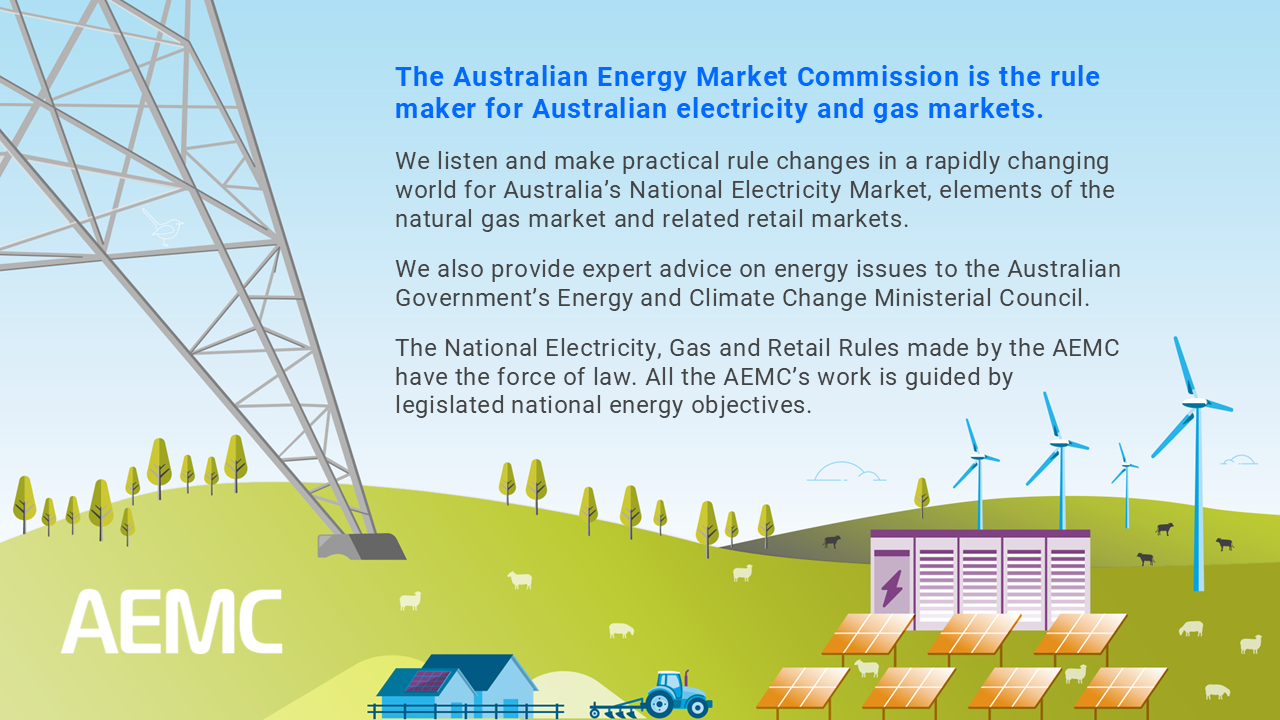
As most of you are aware, the Australian Energy Market Commission's role is to implement practical rule changes for Australia's National Electricity Market, elements of the natural gas market, and related retail markets.

Additionally, we provide market development advice to governments.

We play a key role in shaping tomorrow's energy market, working closely with governments, other market bodies, and energy regulators.

Our vision is for a consumer-focused net zero energy system.

We want all Australians to benefit from a lowest-cost, low-emissions, reliable, secure and safe power system.

This is critical to decarbonising the economy, supporting national prosperity and giving people confidence in the energy transition.

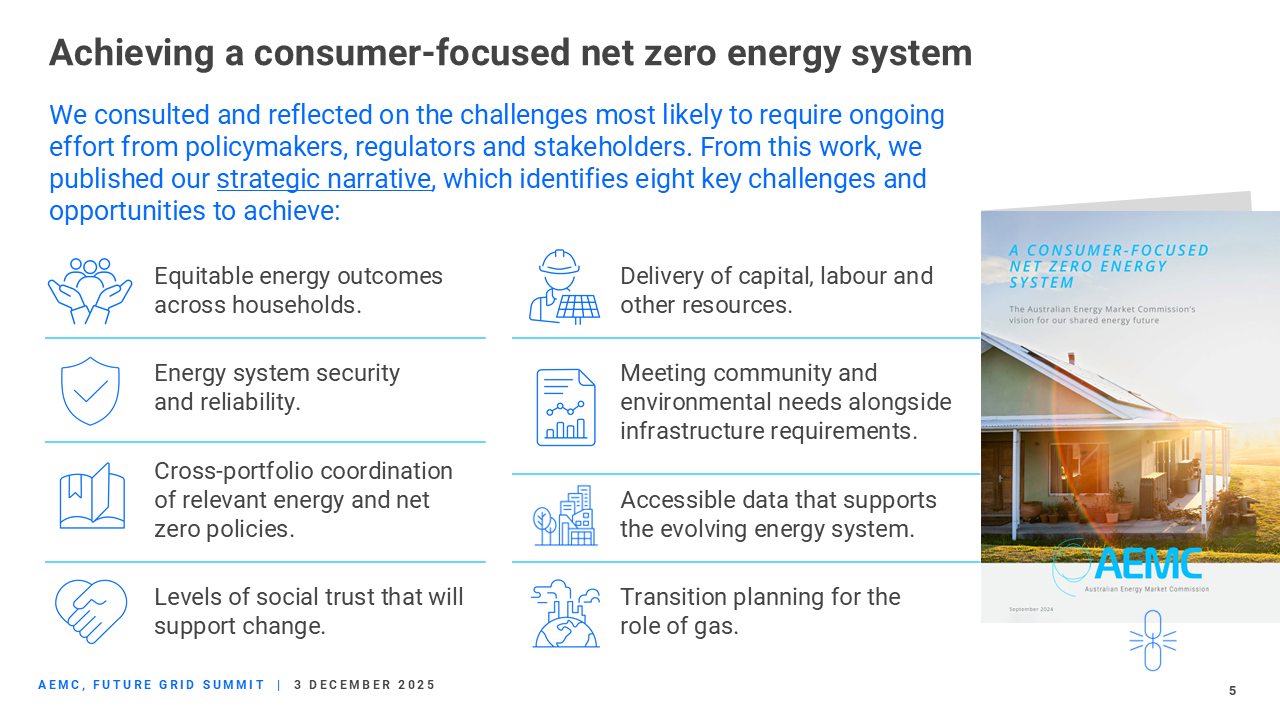
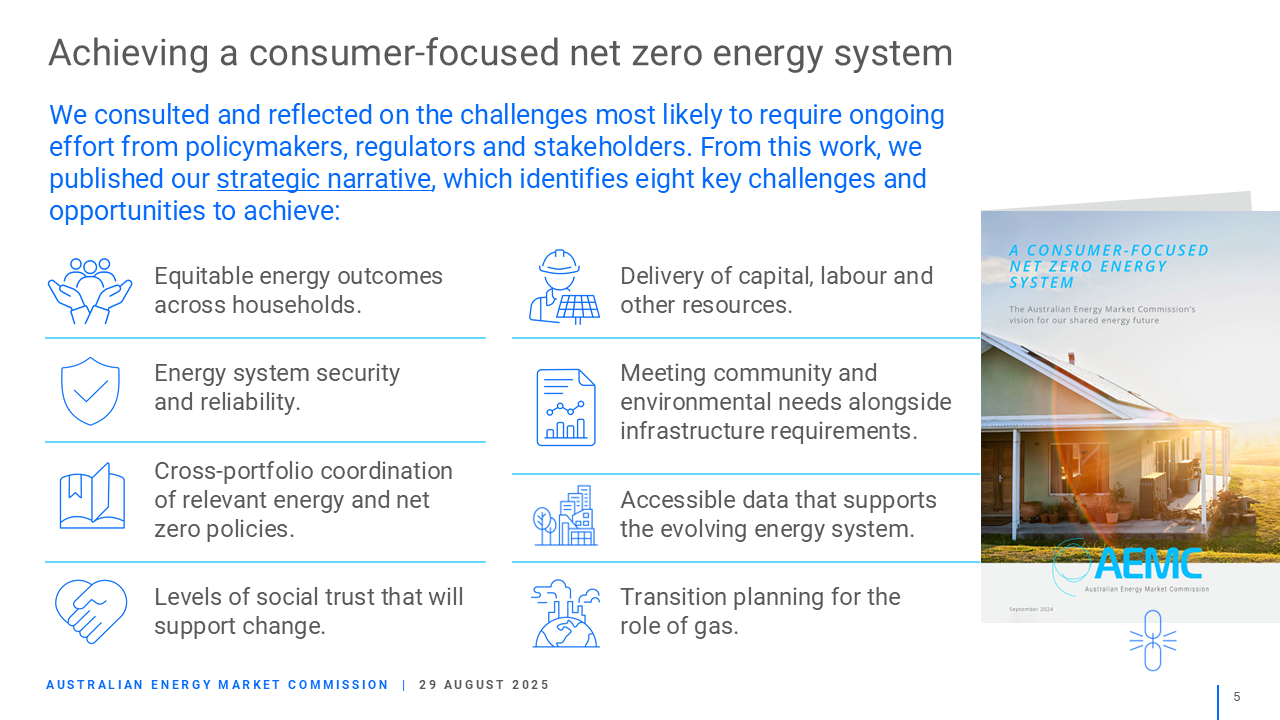
To that end, we have consulted and reflected on the challenges most likely to require ongoing effort from policymakers, regulators and stakeholders. 

From this work, we published our strategic narrative in September 2024, titled A Consumer-Focused Net Zero Energy System.

This document outlines eight key challenges and opportunities that are critical to achieving a consumer-focused net zero energy system.

These cover everything from ensuring equitable energy outcomes for all households to maintaining energy system security and reliability, as well as securing social licence and the capital and labour necessary for the energy transition.  

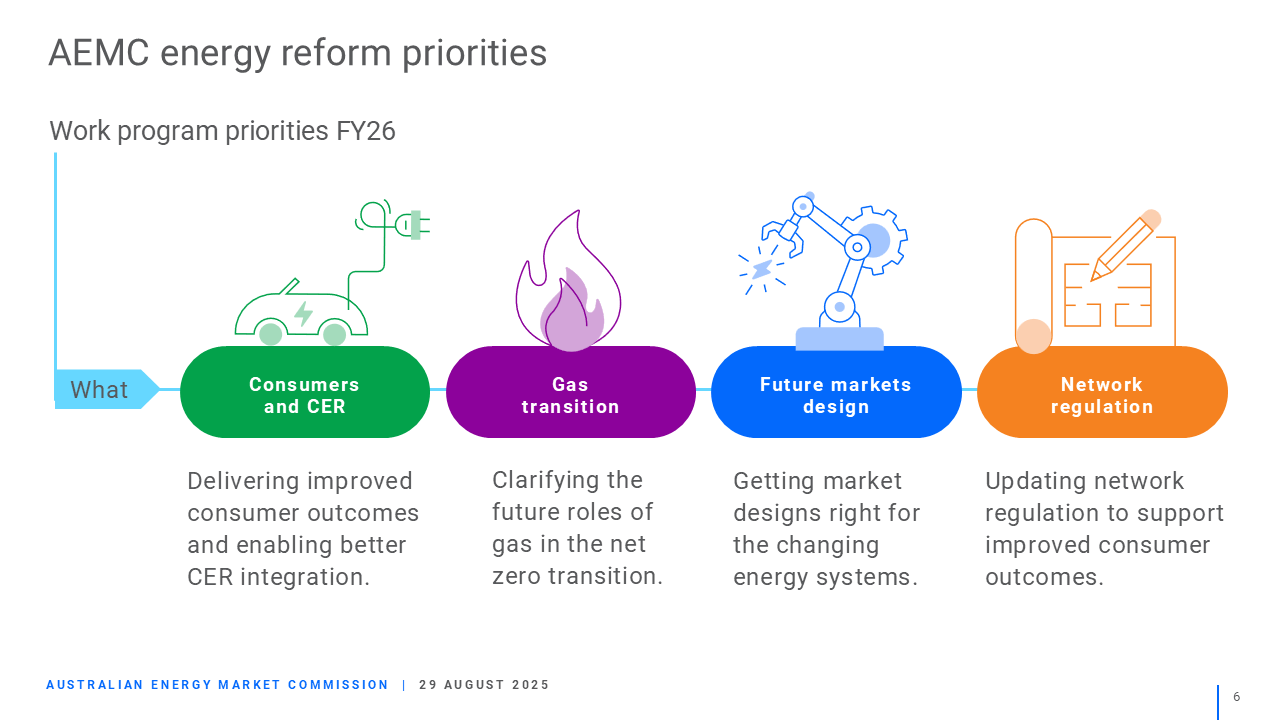
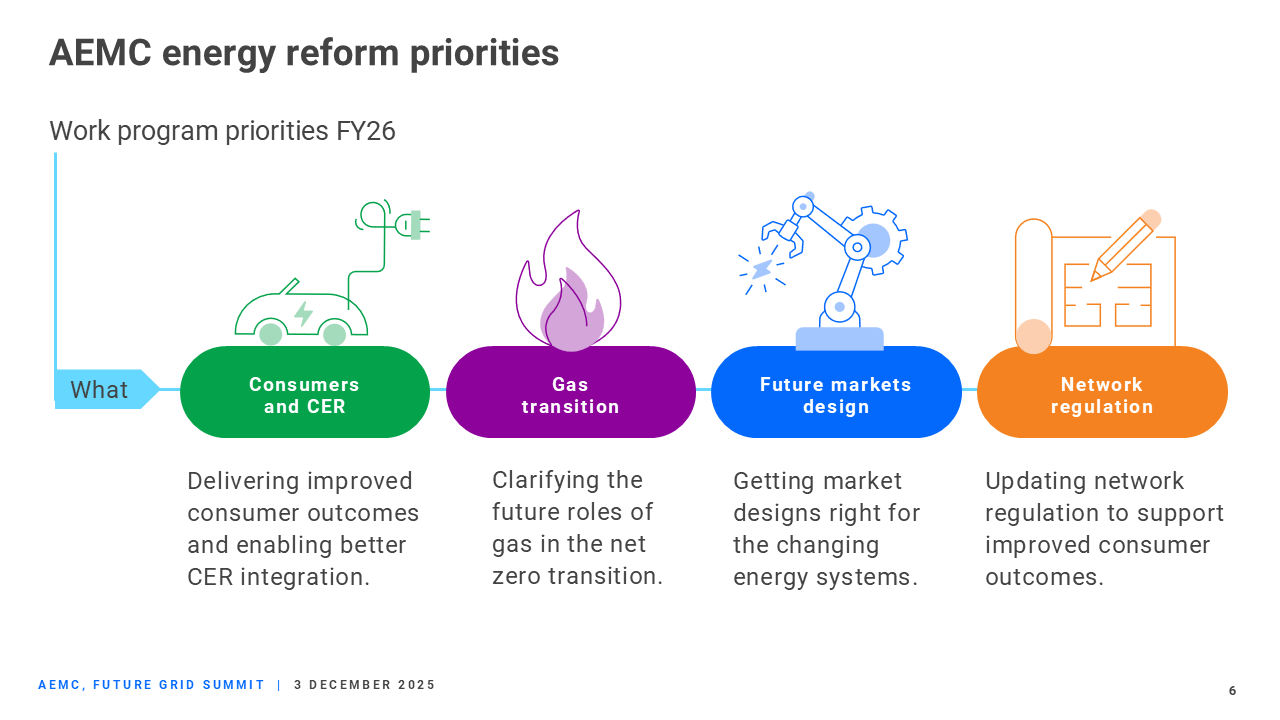
We've distilled these challenges and opportunities into four key energy reform priorities, which are guiding our work program for the next 12 months:

  • Consumers and CER: Delivering improved consumer outcomes and enabling better consumer energy resource – or CER – integration
  • Gas transition: Clarifying the future roles of gas in the net zero transition
  • Future markets design: Getting the market designs right for the changing energy systems, and 
  • Network regulation: Updating network regulation to support improved consumer outcomes.

We have multiple projects underway across each of these reform priorities – and each represents its own significant body of work.

We are seeing some critical themes emerge through the energy transition.

The first of these is the urgency of the energy transition.

This isn't just about distant 2050 targets. Right now, in 2025, we have ageing energy infrastructure, posing immediate replacement needs.

With that urgency comes the need to ensure investment certainty.

The level of investment required to secure a net zero energy system is unprecedented. How do we create clear, stable regulatory frameworks that enable private capital deployment?

Coordination is another key theme. 

The energy transition involves multiple moving parts, necessitating integrated planning across jurisdictions.

We must carefully manage what we're building AND what we're retiring. We must also successfully integrate a substantial amount of consumer energy resources.

Much of the urgency of the transition lies in our ageing coal plants.

Regardless of emissions reduction policy targets, Australia's coal plants are simply ageing out and becoming more unreliable.

Nearly all of Australia's ageing coal-powered generation is expected to close by 2035, and all of it by 2040.

This infrastructure requires rapid replacement to maintain the reliability and security of the power system.

There is a real risk that replacement generation, storage, transmission, and essential system services may not be available in time for when coal plants retire, and this risk must be actively managed and avoided.

Australia's emissions targets – 43% below 2005 levels by 2030, 62-70% by 2035, and net zero by 2050 – further underscore the urgency of the task ahead.

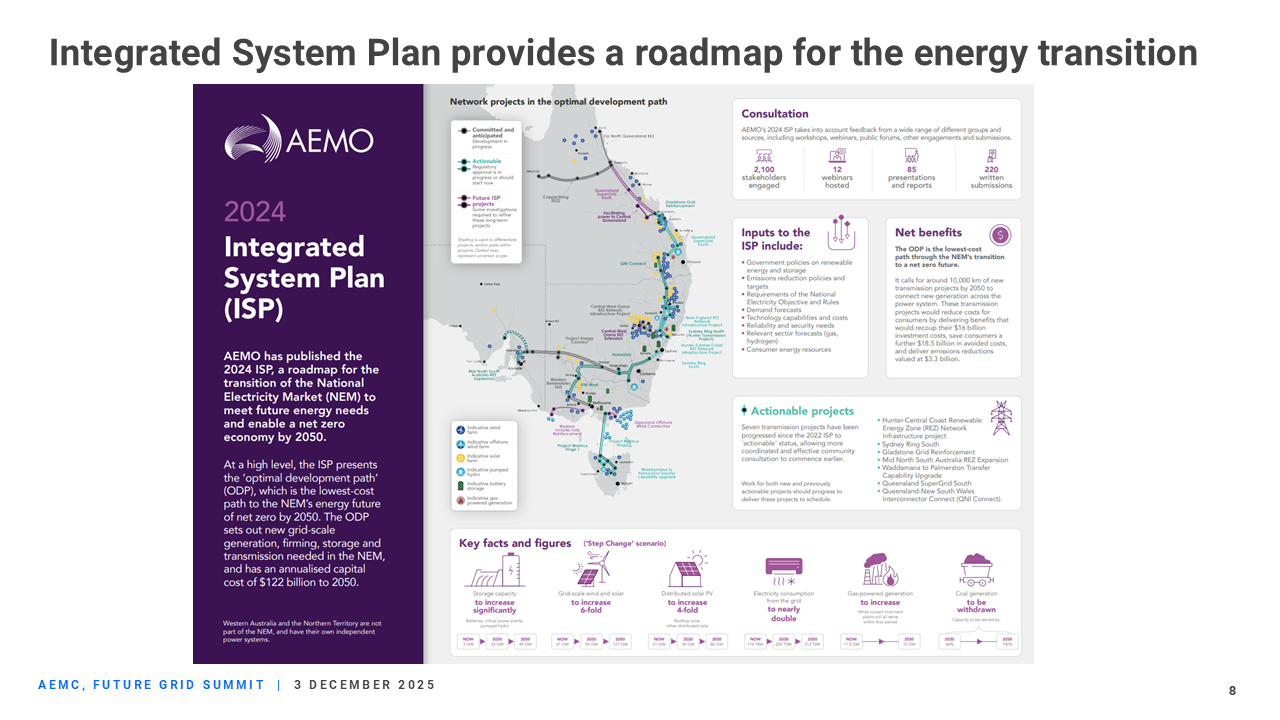
AEMO's Integrated System Plan (ISP) – the roadmap for the National Electricity Market energy transition – outlines the magnitude of what's required to meet those targets.

It makes it clear that our emissions reduction efforts must occur in tandem with a near doubling of electricity consumption by 2050, as large sectors of the economy, such as transport, electrify.

Another driver of this growth is the development of critical digital infrastructure such as data centres.

It's anticipated that data centre electricity consumption alone could grow fivefold within the next decade, from 4 TWh to 20 TWh by 2034.

This creates both challenges and opportunities.

On the one hand, data centres involve large electrical loads that are mostly connected to the grid using inverter-based technology, like that found in wind and solar farms, which creates new stability risks.

On the other hand, they can provide a stable demand that helps integrate renewable energy, addressing minimum load challenges.

We're seeing major data centre operators signing power purchase agreements, underwriting new renewable projects to power their facilities.

The ISP confirms that renewable energy, connected with transmission and distribution, firmed by storage, and backed by gas-powered generation, is the lowest-cost way to supply electricity to homes and businesses as Australia transitions to a net zero economy.

The 2024 ISP outlook required:

  • A six-fold increase in grid-scale wind and solar by 2050
  • A fourfold increase in distributed solar PV, and 
  • A 16-fold increase in storage capacity to accommodate the growth in electricity usage and achieve net zero.

This outlook will be updated in AEMO's Draft 2026 ISP, which will be released next week. While there will undoubtedly be changes, the key messages and direction of travel are expected to be the same.

The ISP sometimes comes under criticism, but we are so fortunate to have a coordinated plan like this. Many other jurisdictions don't and often wish they did.

The ISP plays a central role in coordinating major transmission investment during an unprecedented transformation of our electricity system.

It also informs regulatory processes and jurisdictional planning programs.

As you may be aware, the AEMC has recently published the terms of reference for the Review of the ISP framework to ensure it remains fit for purpose and that its methodology is robust. 

We will formally initiate this review by publishing a consultation paper later this month.

Earlier this week, AEMO published its second annual Transition Plan for System Security.

The expanded report aims to guide the sector through the next phase of the energy transition, focusing on key transition points and actions necessary to maintain power system stability and security.

The report outlines the steps required to replace the system security services provided by retiring coal plants and unlock the growing potential of renewable energy, including rooftop solar, to help deliver a smooth transition for consumers.

New investments and reforms are needed to maintain system security in advance of these transition points, with opportunities to co-optimise both reliability and system security investments to help keep costs as low as possible.

The AEMO Transition Plan for System Security is a substantial piece of work that clearly highlights the challenges associated with maintaining the technical operability of the power system during a period of rapid transition.

It reminds us that a successful energy transition requires more than just zero-emissions energy.

Separately, the AEMC has worked closely with AEMO to develop rule change proposals aimed at further enhancing the existing system security frameworks outlined in the National Electricity Rules.

We anticipate initiating a formal rule change process to consider these proposals in 2026.

As the ISP demonstrates, the energy transition presents a massive infrastructure challenge for Australia – but also a substantial investment opportunity.

To secure the scale of investment required, we need to address project delivery challenges, including project approval delays, cost pressures, social licence issues, supply chain disruptions, and workforce shortages.

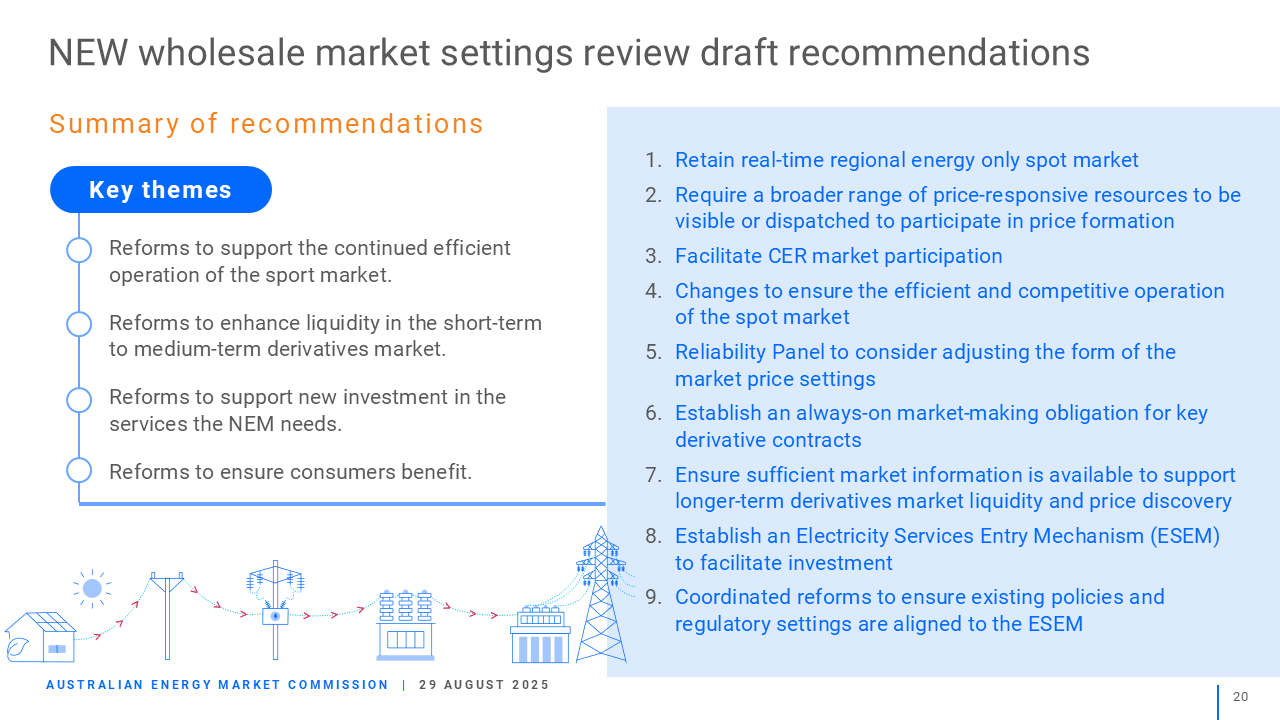
The Nelson National Electricity Market wholesale market settings review outlines reforms to support investment in firmed renewable generation and storage, following the conclusion of the federal government's Capacity Investment Scheme in 2027.

It considers, among other things, the need for mechanisms that ensure reliability, affordability and efficient risk management in a more weather-dependent system.

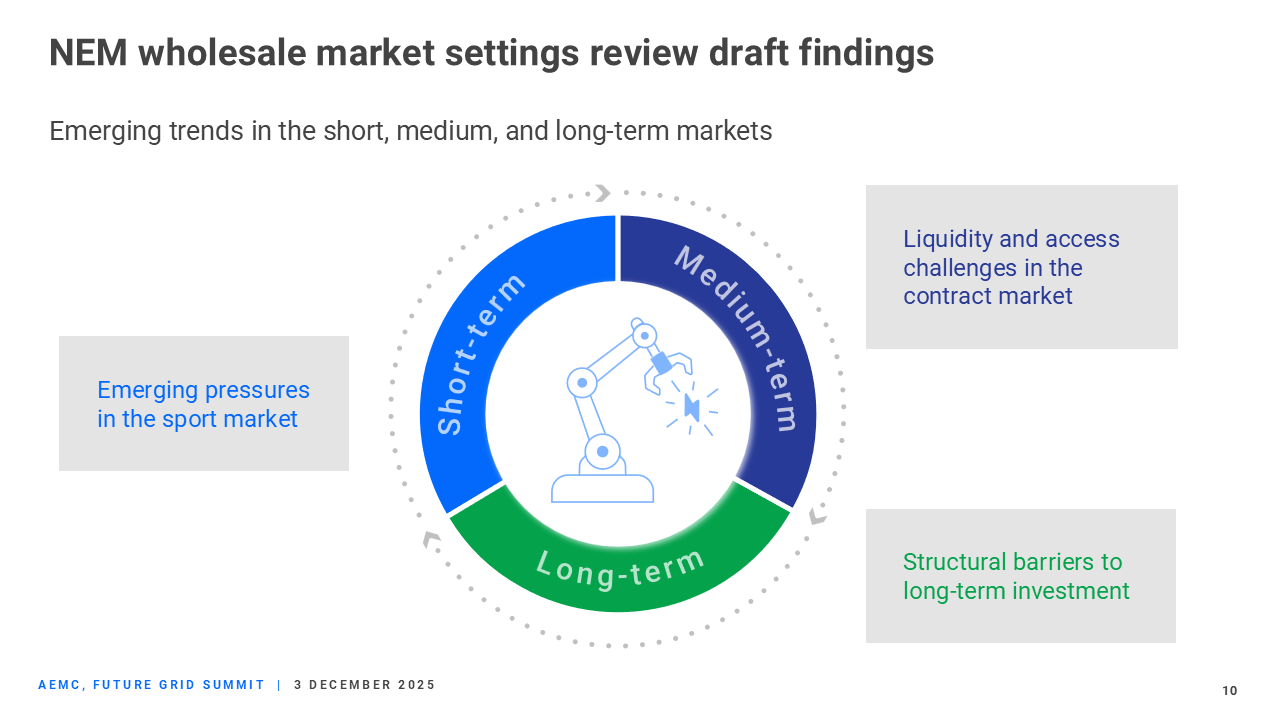
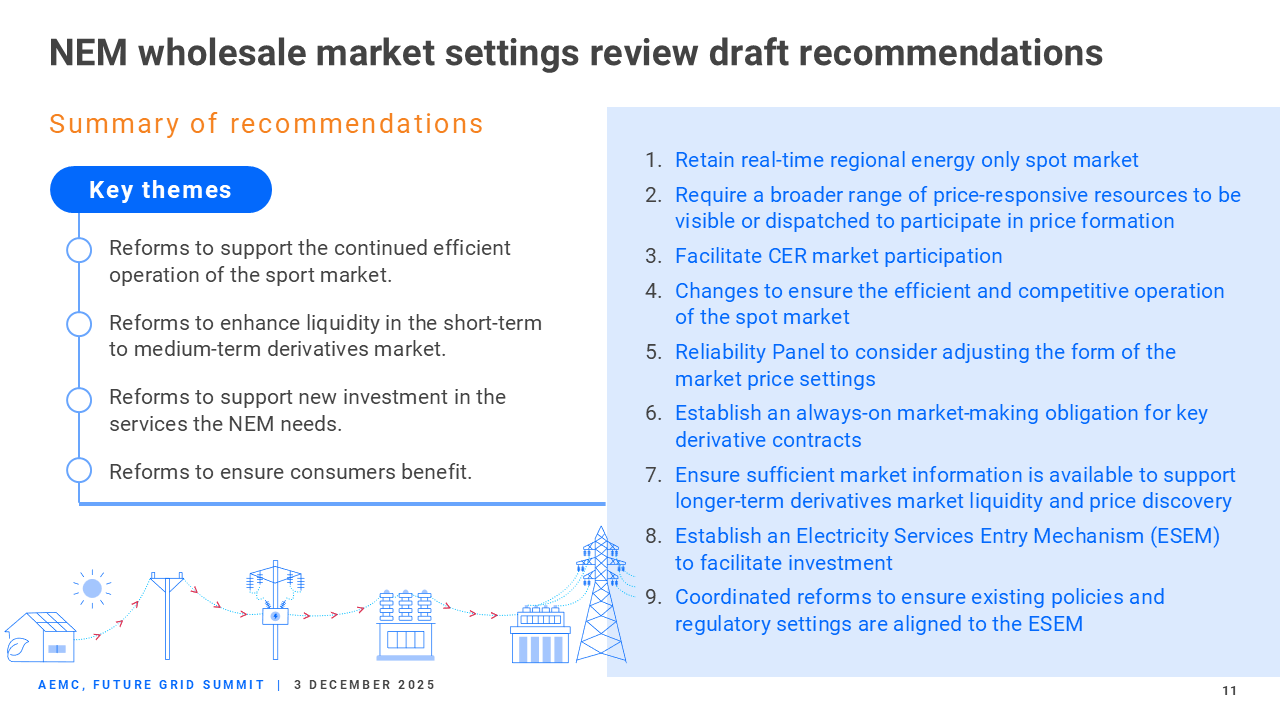
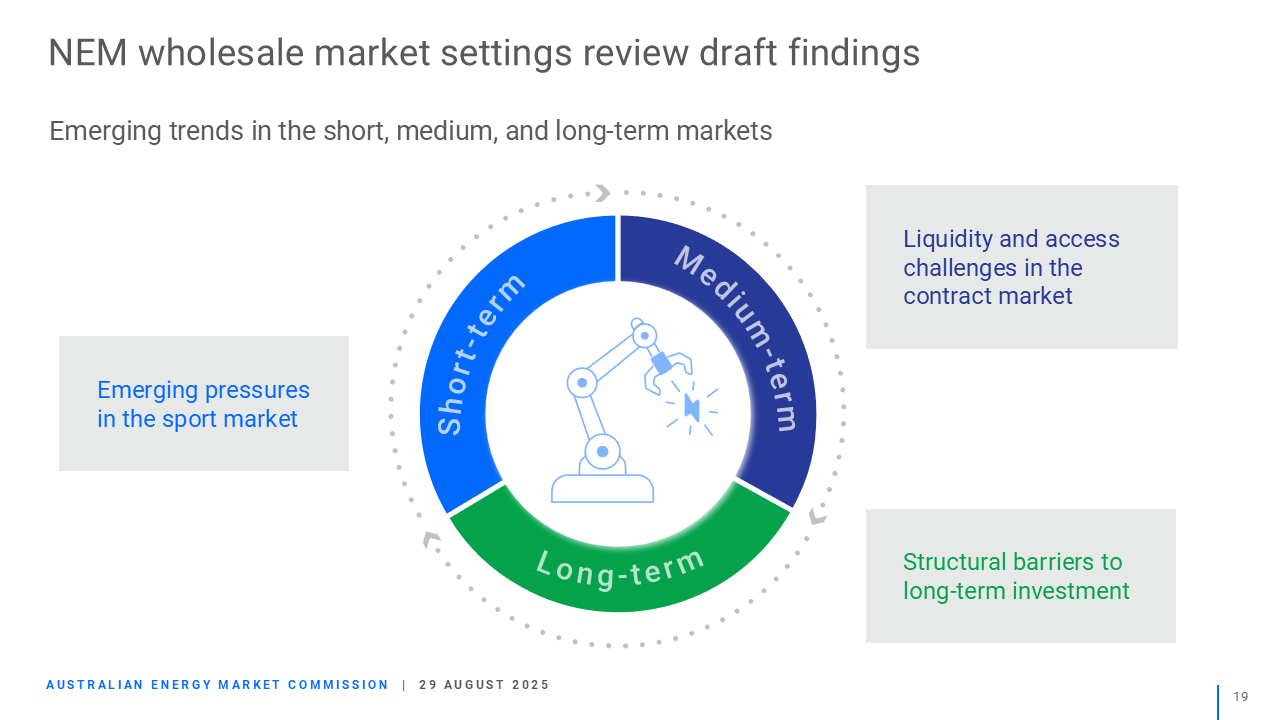
Its nine draft recommendations are grouped into:

  • Short-term measures addressing emerging pressures in the spot market.
  • Medium-term measures, countering liquidity and access challenges in the contract market.
  • Long-term measures to remove structural barriers to long-term investment.

In the short term, it proposes enhanced visibility of CER, placing new obligations on aggregators to improve integration and participation in the wholesale market.

This recommendation addresses the issue of price-responsive resources becoming increasingly invisible to the market, failing to participate in price formation, and distorting forecasting, which could lead to the overbuilding of grid-scale resources.

Medium-term proposals include an always-on market-making obligation, which would require large market participants to continuously offer tradeable volumes with capped bid-ask spreads, improving liquidity and price transparency.

Over the long term, an Electricity Services Entry Mechanism is proposed as a new framework to support long-duration investment in bulk energy, shaping and firming services.

The mechanism would introduce standardised contracts for projects beyond, say, year seven, helping bridge the 'tenor gap' and reduce investor risk.

The review reflects broader international challenges, such as balancing market efficiency with deep decarbonisation, integrating distributed energy, and ensuring long-term investment signals. 

The review is due to deliver its final recommendations by the end of this year.

A final critical component – and indeed a unique element – of Australia's energy transition is the strong uptake of CER.

And, like other aspects of the transition, this poses both challenges and opportunities.

Consumers are already a major driving force in Australia's energy transition, and this is set to continue. 

My colleague Victoria Mollard will speak more on this shortly.

But in a nutshell:

  • Rooftops are already generating enough solar in some regions to meet total demand at certain times.
  • Battery storage – both residential and utility-scale – is becoming mainstream.
  • EVs are creating new demand patterns and potential grid services.

If CER, like solar panels, batteries and electric vehicles, are enabled to participate actively in the energy system, then not only will CER owners benefit directly, but this will also lower system costs, benefiting all consumers.

Various research studies have shown that if CER is integrated well, it could deliver substantial savings in avoided investment of up to $45 billion by 2050, in net present value terms.

It's essential to have the right regulatory frameworks in place to realise these benefits by encouraging effective coordination and integration of CER.

The Commission has several ongoing and recently completed projects aimed at achieving this goal.

For example, the integrating price-responsive resources rule change, which will enable resource aggregators to participate in the wholesale electricity market, can have a big impact on reducing system costs and delivering benefits to all customers.

Our pricing review, which Victoria will discuss, is considering the changes needed to ensure that competition in the retail market delivers the mix of products and services that consumers value now and in the future, while also delivering a lower-cost system for all consumers.

Publication of the pricing review draft report is planned for next week, 11 December, to be followed by a public forum on 15 December 2025.

The uptake of CER is making distribution system planning more complex. The Commission published a discussion paper last month setting out three different approaches to improve integrated distribution system planning in the National Electricity Rules.

Addressing these challenges will improve transparency for distribution network users, including consumers, who will then be better placed to make informed choices and investments in CER.

In September, we published a draft determination proposing a framework to enable access to real-time data from smart meters.

We believe that all consumers should have access to real-time data as part of their electricity service, enabling them to more readily access the energy services they value.

The proposed draft rule would result in the progressive upgrade of the fleet of smart meters, generally enabling access to real-time data at no additional charge.

Publication of the final rule determination is planned for 18 December 2025.

A common theme that emerges throughout much of our work, as well as the work of others, is that the energy transition offers significant savings for households that electrify their energy use.

Another is that ongoing delays in renewable energy and supporting network investments will increase the cost of the energy transition.

Again, Victoria will speak more about this shortly.

Make no mistake, we are in a 'The World Changed Here' moment.

There is much work to do. However, it's also worth noting the work that has been done and how far we've come to reach this point in the energy transition.

Here in Australia, we are 15 years away from coal-fired power generation being relegated to history. Grid-scale renewable generation and CER are emerging in their place as Australia and the world increasingly electrify.

My home state of South Australia is showing Australia – and the world – what is possible.

The last coal plant in South Australia closed in 2016. 

Wind and solar resources regularly supply more than 100% of electricity demand.

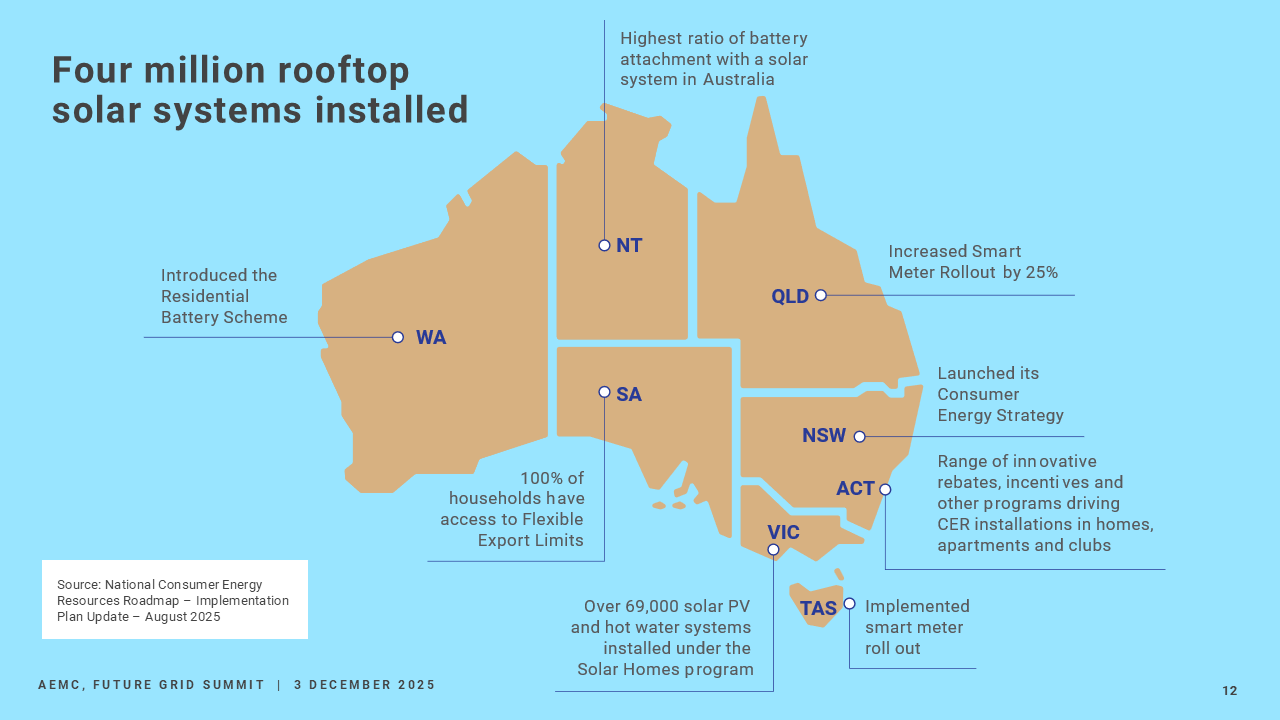
Over 54% of homes have solar panels, contributing to the state's high percentage of 75% of annual electricity generated from wind and solar resources. 

Rooftop solar alone now supplies over 100% of electricity demand at times, and by 2027, South Australia is expected to reach 100% net annual variable renewable energy.

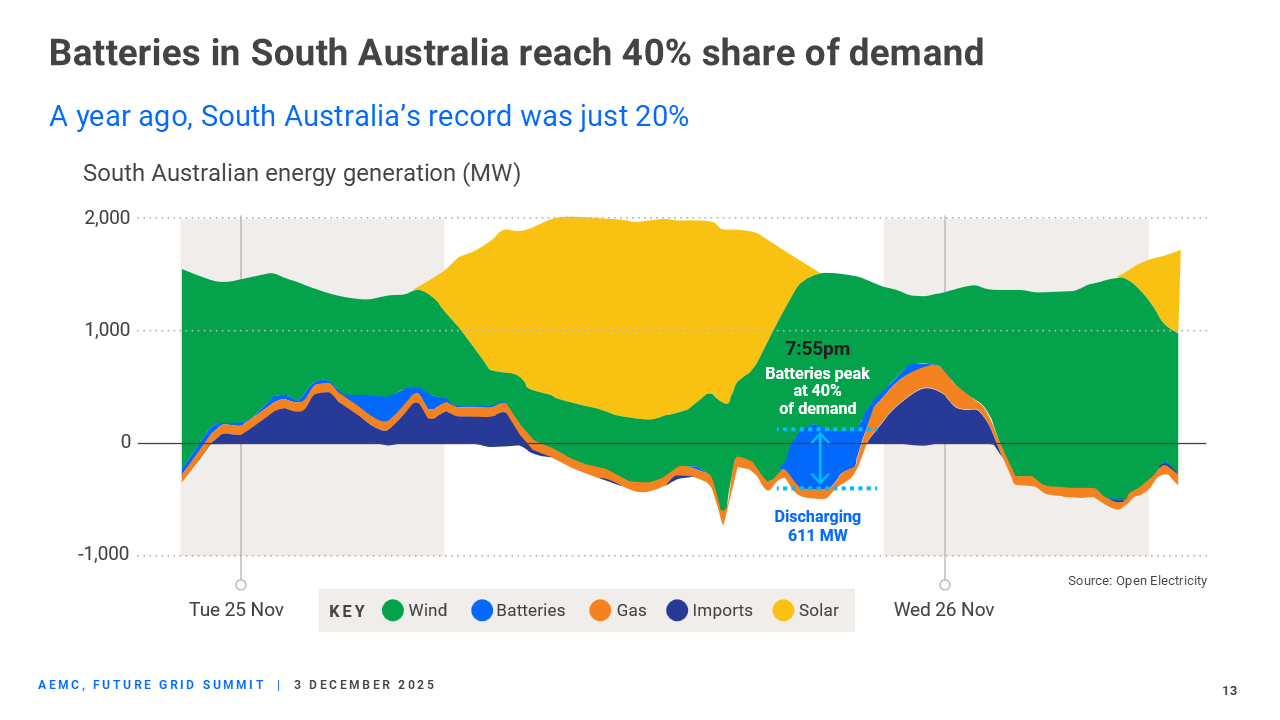
Batteries are playing an increasingly important role, and just last week, South Australian batteries supplied a new world-leading record 40% of demand from stored energy during the evening peak.

An energy revolution is indeed occurring before our eyes, transforming forever the way we use, generate and store energy.

Just as in the days of Nikola Tesla, we need to seize our 'The World Changed Here' moment, a pivotal moment where we all have a part to play, to ensure that the energy transition that is reshaping our energy system and economy delivers benefits for all Australians and people all around the world. 

Navigating the Energy Trilemma – Challenges and Opportunities Transitioning to a Low-Carbon Energy Future

29 August 2025

Rainer Korte, Commissioner

Keynote address, Singapore Electricity Roundtable 2025

Singapore Edition Hotel, Singapore

Good afternoon and thank you to the Energy Market Company (EMC) for giving me the opportunity to speak to you today. 

Canadian author, Yann Martel, said: "There is nothing like the unimaginable to make people believe." 

Not so long ago, it was unimaginable that a state with a population of nearly 2 million people and a gigawatt-scale power system could be powered entirely by rooftop solar energy.  

But that is what has been achieved in South Australia. 

From a standing start about 20 years ago, when the first wind farms were connected to the grid, we are now seeing what 100% net variable renewable energy (VRE) from wind and solar looks like in practice. And we are seeing this regularly.  

Over 53% of homes in South Australia have solar panels contributing to the state's high percentage of 75% of annual electricity generated from renewable resources.  

Rooftop solar alone can now supply over 100% of electricity demand at times in the middle of the day. 

And by 2027, South Australia is expected to reach 100% net annual variable renewable energy. 

This world-leading energy transition presents both opportunities and challenges, which I'll discuss further as we explore navigating the energy trilemma to a low-carbon energy future. 

First, let me introduce you to the role of the Australian Energy Market Commission. 

At the Commission, we engage widely with stakeholders and make practical rule changes for Australia's National Electricity Market, elements of the natural gas market and related retail markets.  

These rules enable the changes needed for the energy transition and to keep the lights on in the National Energy Market. 

The Commission acts on rule change requests made by stakeholders, including governments, industry participants and consumers. 

In addition, we provide market development advice to governments. 

So, we play a key role in shaping tomorrow's energy market. 

And we work closely with other market bodies and energy regulators. 

Our vision is for a consumer-focused net zero energy system.  

We want all Australians to benefit from a lowest-cost, low-emissions, reliable, secure and safe power system. 

This is critical to decarbonising the economy, supporting national prosperity and giving people confidence in the energy transition. 

We have consulted and reflected on the challenges most likely to require ongoing effort from policymakers, regulators and stakeholders.  

From this work, we published our strategic narrative, which outlines eight key challenges and opportunities that are critical to achieving a consumer-focused net zero energy system. 

I won't go through them all, but you can see how they clearly reflect the challenges of the energy trilemma. 

We recognise that energy security, reliability and cost underpin our quality of life and that the energy transition must be sustainable and benefit all consumers equitably.  

In other words, we can't deliver the kind of system we want for consumers without solving the issues of the energy trilemma.  

From these challenges and opportunities, we have developed four energy reform priorities guiding our work program for the next 12 months: 

  • Delivering improved consumer outcomes and enabling better consumer energy resource integration 

  • Clarifying the future roles of gas in the net zero transition 

  • Getting market designs right for the changing energy systems, and  

  • Updating network regulation to support improved consumer outcomes. 

I won't talk about these in more detail, but I do want to say a little more about consumers and consumer energy resources. 

We are focused on capitalising on Australia's world-leading rates of rooftop solar and other household and business energy resources. 

This is where the South Australian experience is informative. 

First, to give you some context, the Australian National Electricity Market (NEM) is an energy-only gross pool market in which generators sell electricity into a central spot market to meet demand. Prices are set based on a 5-minute security-constrained dispatch. 

The market operates on one of the world's longest interconnected power systems, extending some 5,000 kilometres and incorporating around 40,000 kilometres of transmission lines and cables. 

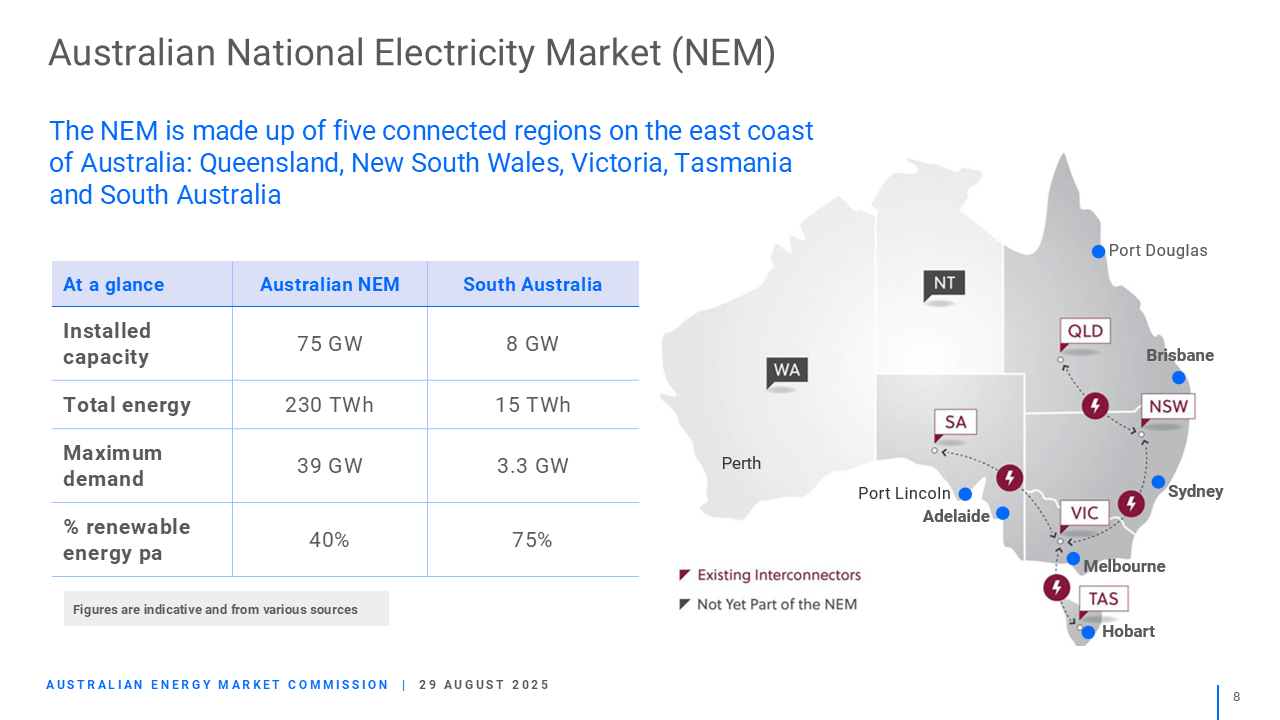
It is made up of five connected regions on the east coast of Australia. 

South Australia is a relatively small region that is weakly connected at the southwestern end of this interconnected power system.   

South Australia is a global leader in the adoption of VRE wind and solar resources. 

Its last coal-fired power station closed in 2016. 

Some 75% of its annual electricity demand is supplied by VRE. This is projected to reach 85% this financial year, with a target of 100% net renewable energy by 2027. 

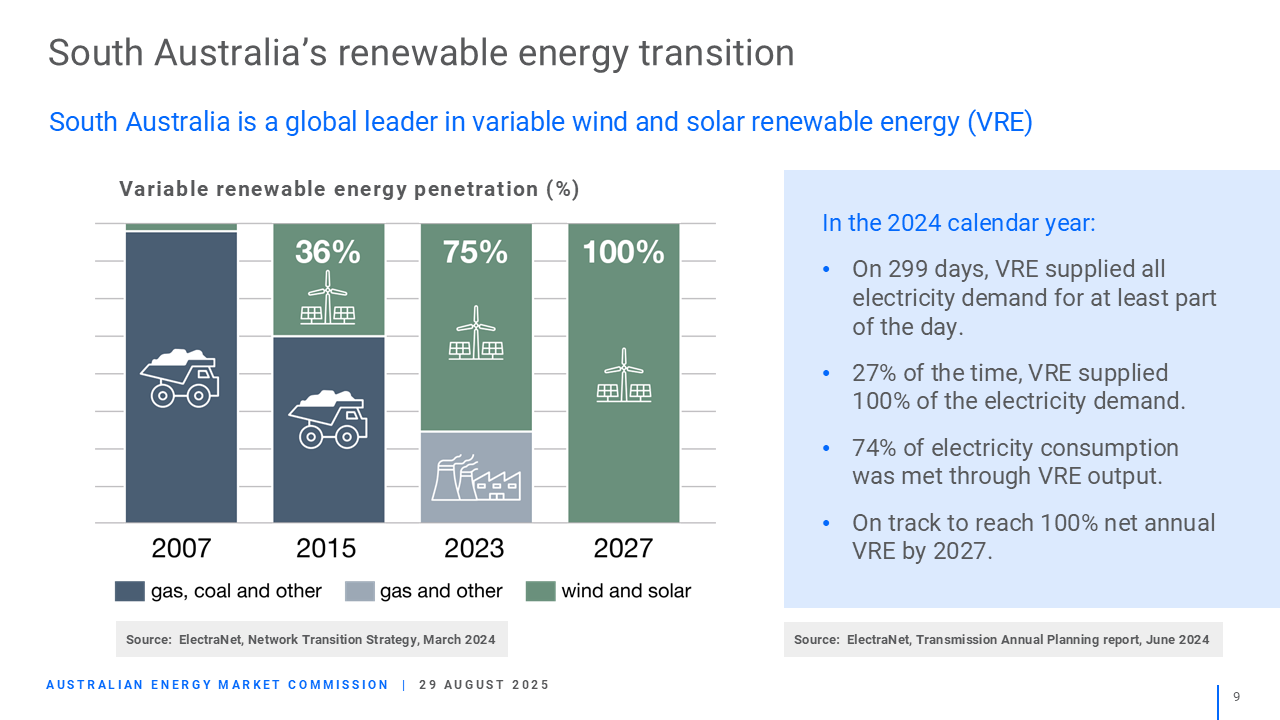
VRE supplied all the electricity demand for at least part of the day on 299 or 82% of days in the 2024 calendar year. 

South Australia is one of only two grids in the world—the other one is Denmark—to be promoted to Phase 5 of the International Energy Agency's renewable integration ladder, where solar and wind power generation frequently exceed local demand. 

This has been achieved in under two decades—from near zero renewables in 2007 to a projected 100% by 2027—thanks to the adoption of large-scale wind and solar, rooftop solar, and large and small-scale battery energy storage. 

And unlike other jurisdictions with high VRE penetration, South Australia has no hydroelectricity, pumped hydro, or nuclear power. 

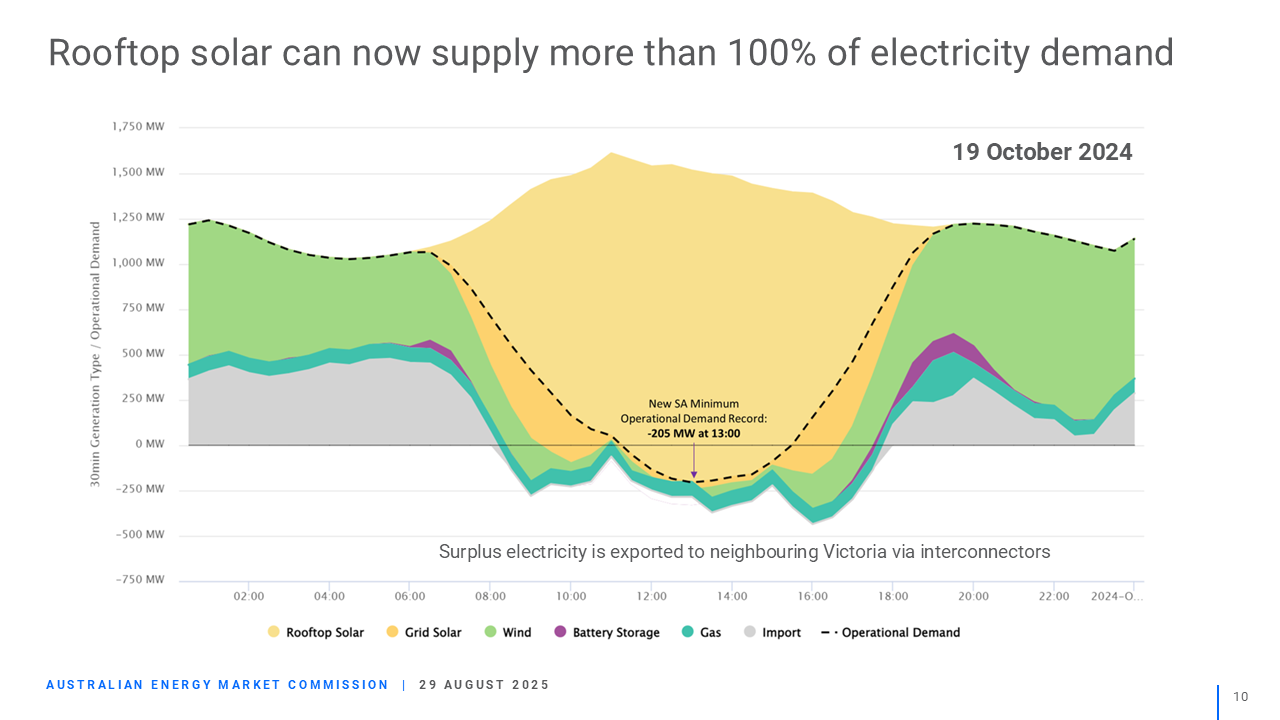
As I mentioned earlier, rooftop solar can now supply more than 100% of demand in the middle of the day. 

On 19 October 2024, a record 30-minute minimum operational (grid) demand of minus 205 MW was experienced due to mild temperatures, clear skies and a large load outage.  

At this time, distributed solar resources supplied approximately 114% of the underlying demand in the region, with surplus electricity exported via interconnectors to the neighbouring state of Victoria.  

Minimum demand in South Australia has been falling on average by more than 100 MW per year, and this trend is projected to continue. 

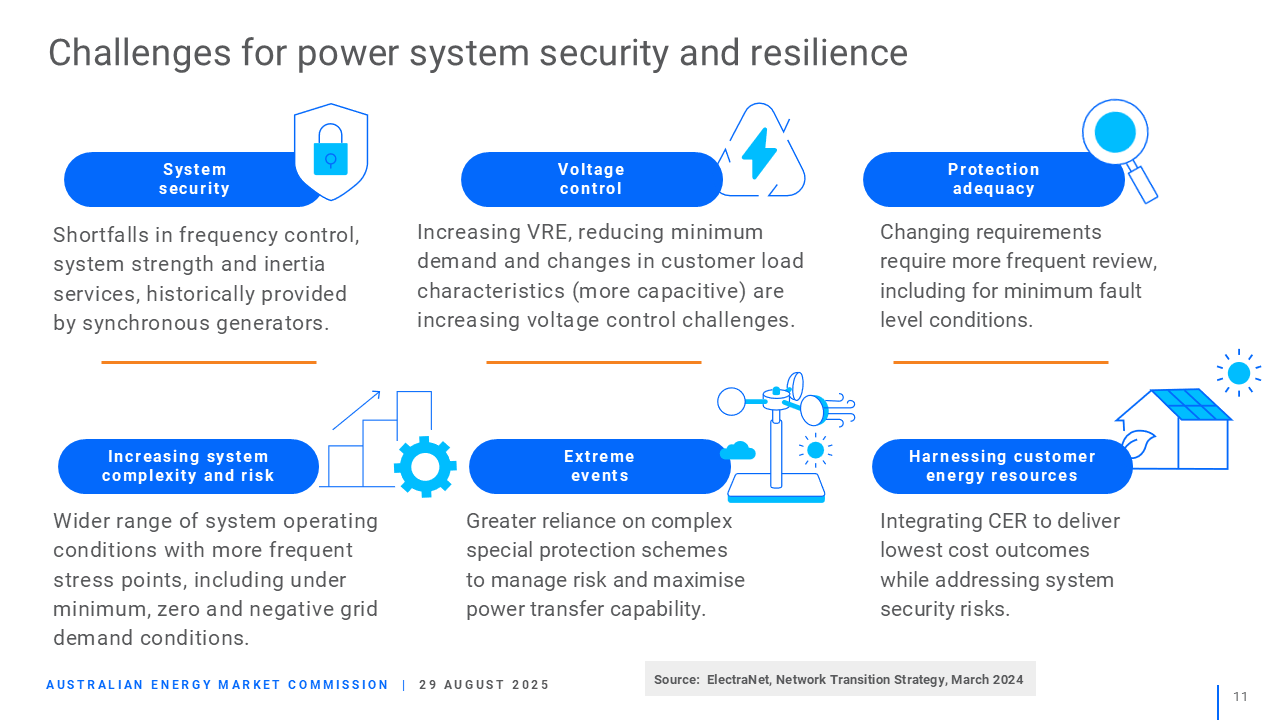
The high penetration of VRE, declining synchronous generation, and declining minimum demand have created challenges that need to be managed. 

At a high level, these include managing congestion from reverse power flows and maintaining overall power system security and resilience. 

For example, shortfalls in system strength and inertia have needed to be addressed through investment in synchronous condensers and procurement of essential system services. 

It has become important to ensure there is sufficient fault current available for protection systems to operate as intended. 

The high penetration of rooftop solar panels and lighter loading on the grid mean voltage control has become an issue, with solutions required to manage high voltages and absorb excess reactive power under light load conditions. 

With aggregated rooftop solar now the largest single generator in South Australia, it has been necessary to develop ways to curtail rooftop solar output, when needed as a last resort, to maintain system security. 

Energy storage is being expanded to store excess solar energy for use at times of low solar generation. 

Interconnection with neighbouring states is being expanded to enable greater capacity to export excess renewable energy and conversely to import energy when needed and economically feasible. 

At the local level, the world-leading work of distribution system operator, SA Power Networks, has been a key driver of South Australia's consumer energy resource transformation.  
 
SA Power Networks pioneered flexible connection programs that allow more CER to safely and efficiently connect to the grid.  

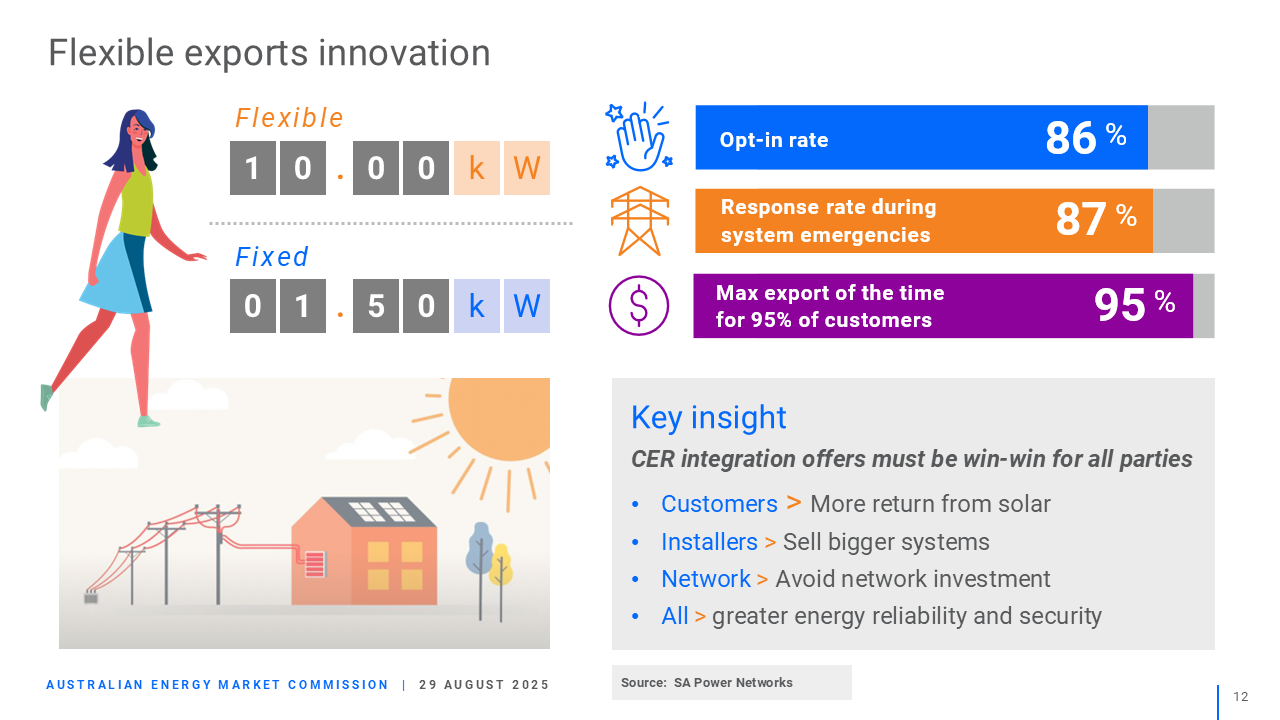
It was the first in the world to implement flexible export limits at scale, replacing rigid, one-size-fits-all constraints with dynamic limits that respond to real-time network conditions.  

Under this program, customers can choose a flexible export limit of up to 10 kW compared to a fixed export limit of 1.5 kW. The customer opt-in rate has been a high 86%, and 95% of customers have rarely been curtailed below the maximum flexible export limit. 

This pioneering shift has allowed far more homes to connect and export solar power without creating network congestion or compromising grid stability, unlocking over 3 GW of rooftop solar on a 3.3 GW peak demand power system. 

These outcomes demonstrate how distribution network operators can be a key enabler of clean energy growth. 

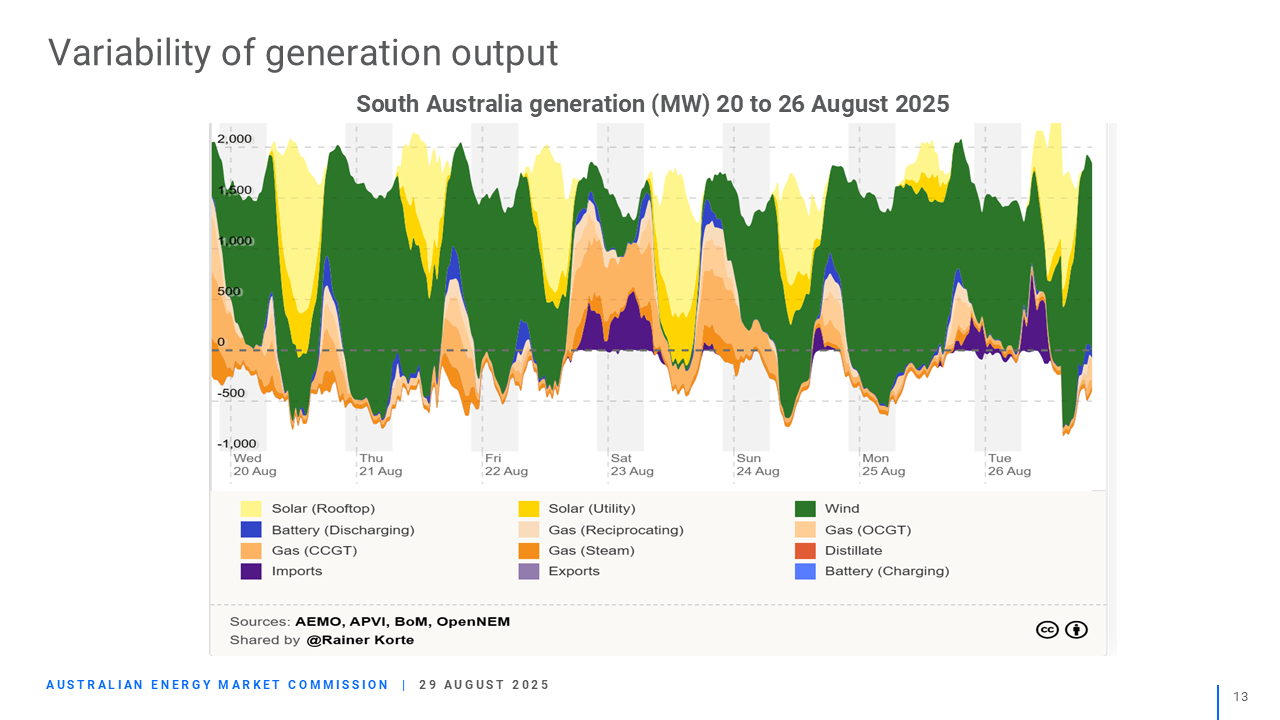
A power system with a high penetration of VRE is more weather-dependent and subject to greater variability and wholesale market price volatility. 

The chart shows a typical high degree of variability in VRE output over a recent week. At various points, South Australian demand was met by 100% wind, 100% solar and, on one day, by predominantly gas generation and imports. 

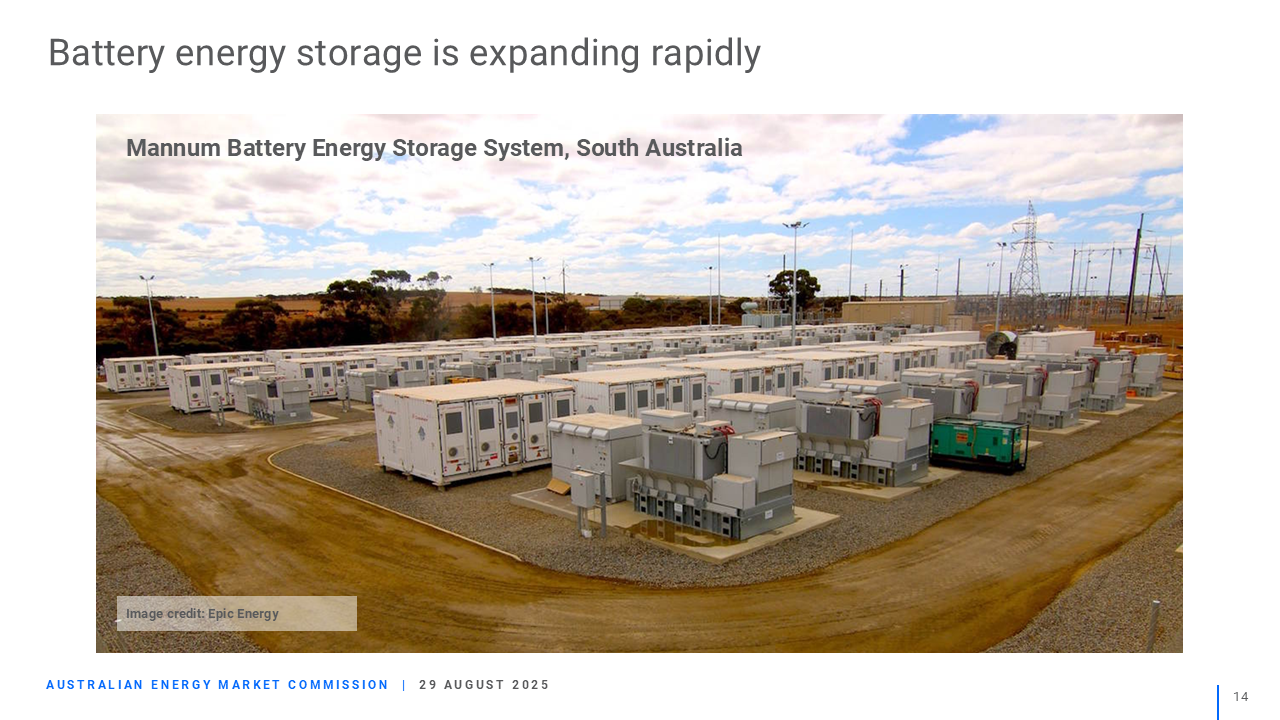
Battery energy storage has an important and increasing role to play in managing this variability. 

South Australia now has over 700 MW of battery capacity versus a peak demand of around 3.3 GW, and stored battery energy now regularly displaces gas peaking generation in the state. 

South Australia is home to the world's first big battery, the Hornsdale Power Reserve, which has been operating since 2017.  

It is also home to the pioneering Dalrymple battery, the first grid-forming battery in Australia, which commenced commercial operation in 2018. 

Battery energy storage in the Australian NEM is also experiencing rapid growth. 

As of June 2025, utility-scale battery capacity was 3.1 GW (6.4 GWh).  

An additional 13.7 GW (36.4 GWh) is either under construction or committed by the end of 2027, bringing the total capacity to 16.8 GW, enough to meet nearly half of peak demand.  

Future projects are characterised by longer durations (2-4 hours or more) and are being co-located with renewable energy sources. 

In addition, Australians are installing 1,000 residential batteries a day, driven by a federal Cheaper Home Batteries Program. 

Battery-electric vehicles with vehicle-to-grid capability will also add significantly to the potential energy storage available in the system.  


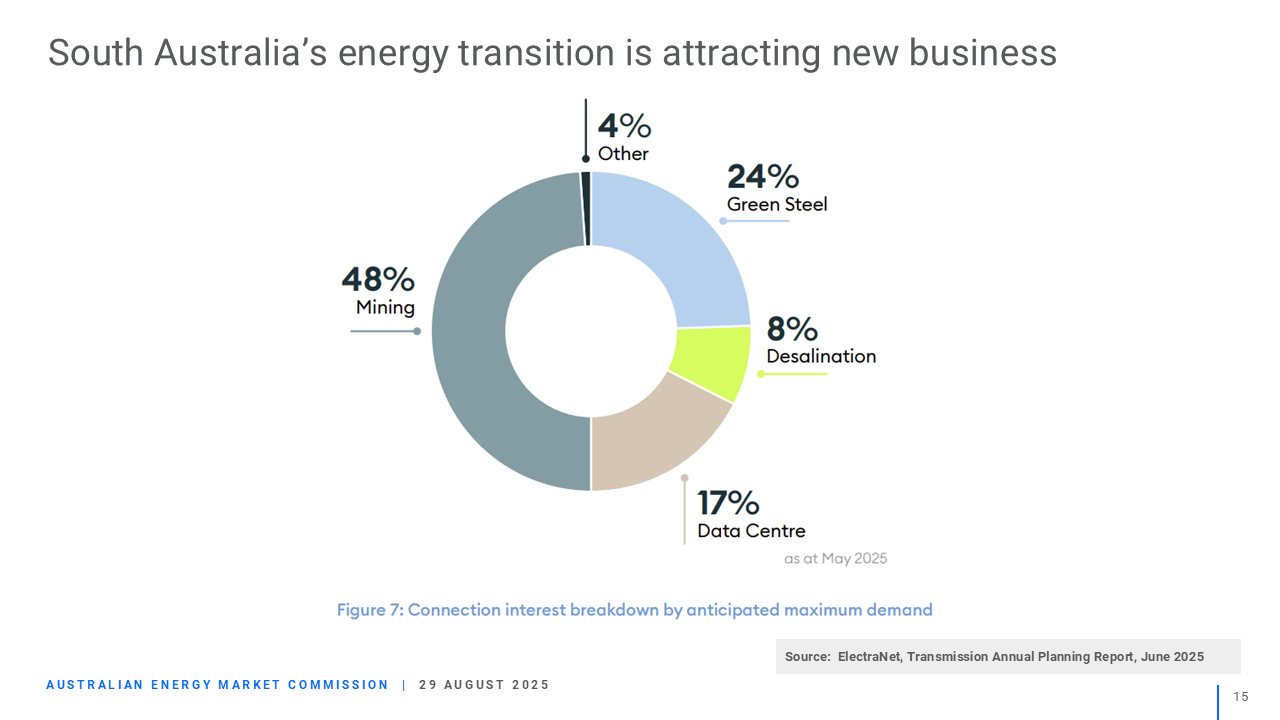
Another point to note is the level of interest South Australia's energy transition is generating from industry looking to source lower-cost, zero-emissions wind and solar energy.  

State transmission company ElectraNet says there is currently more than 2.5 GW of active interest from manufacturers and industries, almost double the state's average grid demand of 1.3 GW.  

New enquiries have also reached levels that were unimaginable just a few years ago.  

37 companies are enquiring about setting up major businesses in the state, representing a massive 15 GW of additional load. While not all these opportunities are expected to be realised, they are a strong indicator of the potential for significant demand growth in the state. 

Further transmission investment will be required in the coming years to meet this demand growth and connect the renewable energy required to supply it. 

Energy transition demand growth is a positive development for the South Australian economy and supports delivering the lowest cost outcomes for all customers.   

South Australia has demonstrated that operating at 100% variable renewable energy is achievable, and this is now being experienced regularly and for longer periods of time. 

The South Australian experience is significant from a national and international perspective. 

It is fast being replicated in other regions of the Australian National Electricity Market. 

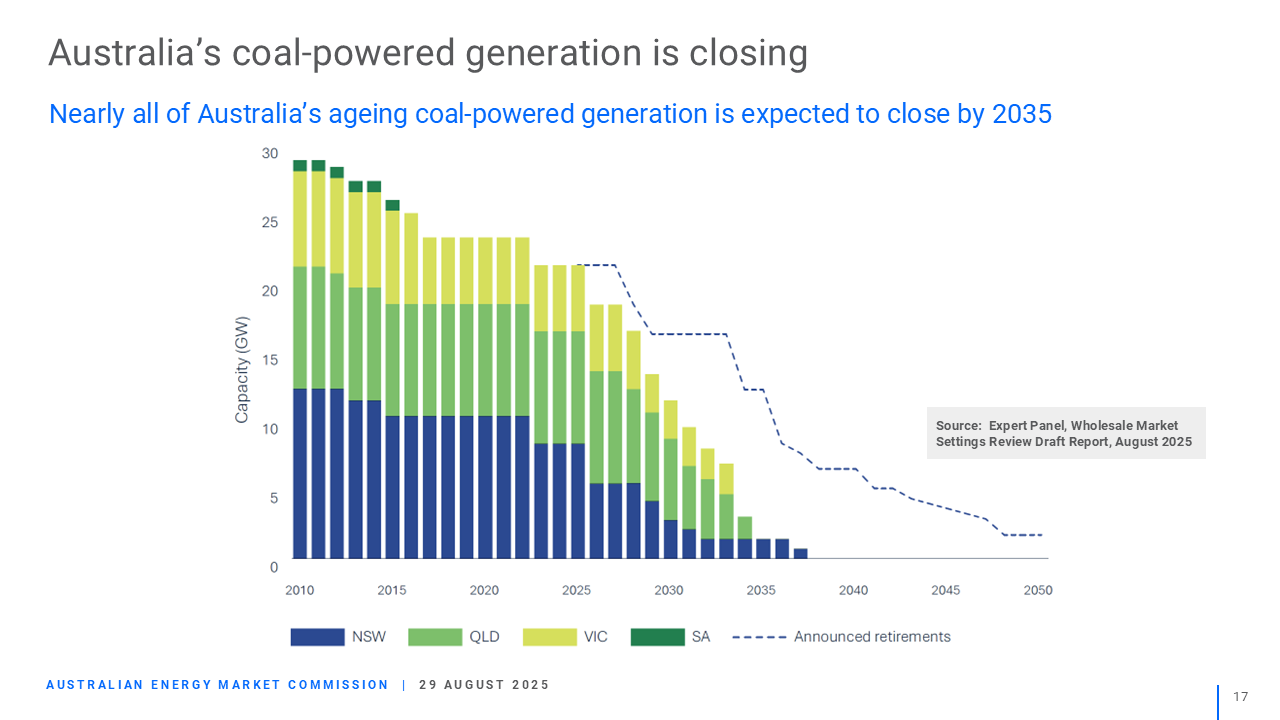
Nearly all of Australia's ageing coal-powered generation is expected to close by 2035 and all by 2040. 

This is a key driver of the energy transition in Australia, along with emissions reduction targets, reduction in the cost of solar and battery resources, and the rapid uptake of consumer energy resources.  

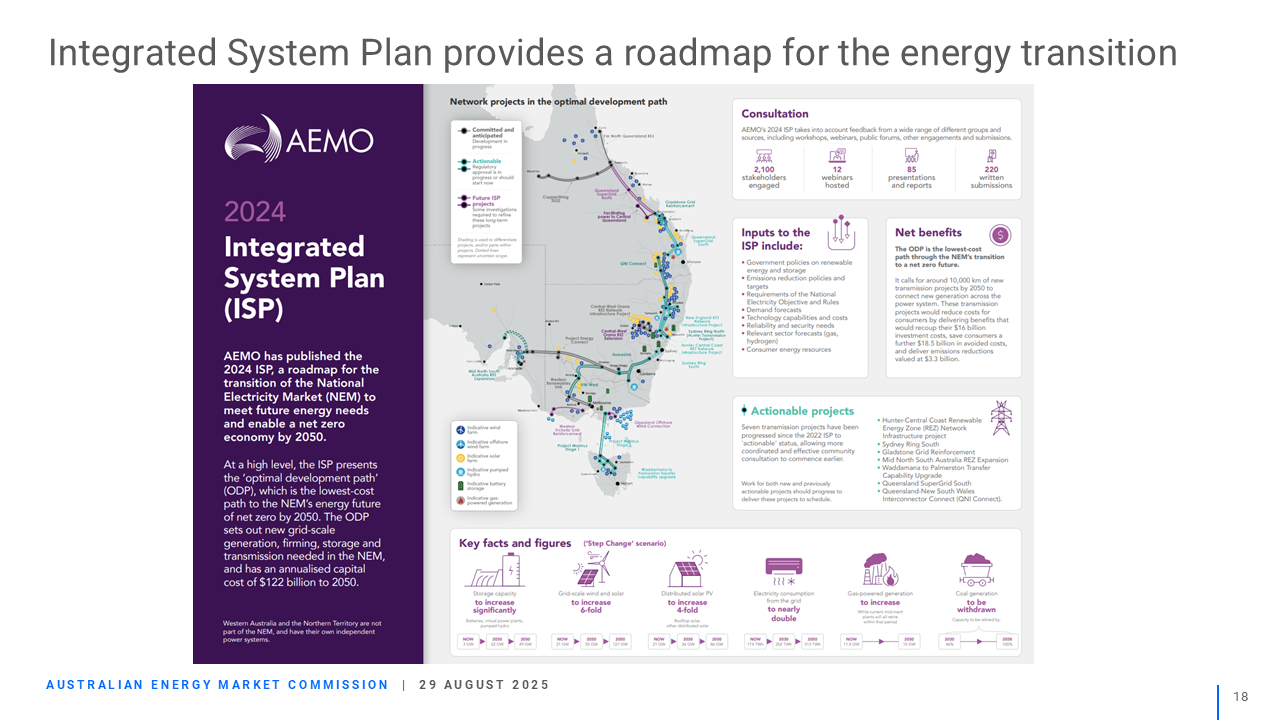
The Integrated System Plan (ISP), prepared by the Australian Energy Market Operator (AEMO), serves as a roadmap for the Australian energy transition. 

The plan confirms that renewable energy connected with transmission and distribution, firmed by storage, and backed by gas-powered generation, is the lowest-cost way to supply electricity to homes and businesses as Australia transitions to a net zero economy. 

It forecasts a tripling of grid-scale wind and solar by 2030, a sixfold increase by 2050, and a fourfold increase in distributed solar PV. 

The plan's centrepiece is an optimal development path (ODP), which is the least-cost path to meeting customer demand and federal and state government emissions reduction targets.  

The 2024 ODP included a mix of replacement grid-scale generation, storage, and transmission, with an annualised capital cost of $122 billion to 2050. 

Consumers are already a driving force in Australia's energy transition, and this is set to continue. If CER, like solar panels, batteries and electric vehicles, are enabled to participate actively in the energy system, then this will result in lower costs for all consumers. 

A range of research studies has shown that if CER is integrated well, it could deliver substantial savings in avoided grid-scale investment of up to $45 billion by 2050. 

More broadly, key transition challenges and risks include the scale of investment required, planned projects facing delivery challenges, including approval process delays, investment uncertainties, cost pressures, social licence issues, supply chain disruptions, and workforce shortages. 

There is a real risk that replacement generation, storage, transmission, and essential system services may not be available in time for when coal plants retire, and this risk must be actively managed and avoided. 

The ISP is a clear call to investors, industry and governments to urgently deliver generation, storage and transmission to ensure Australian consumers continue to have access to reliable electricity at the lowest cost. 

A recent independent review of Australia's wholesale electricity market settings addressed some of these challenges, focusing on ensuring market settings remain fit for purpose throughout the rapid energy transition. 

In its draft report published in August 2025, the Nelson Review outlines reforms to support investment in firmed renewable generation and storage, following the conclusion of the federal government's Capacity Investment Scheme in 2027. 

It considers, among other things, the need for mechanisms that ensure reliability, affordability and efficient risk management in a more weather-dependent system. 

And it makes nine recommendations, grouped into: 

  • Short-term measures addressing emerging pressures in the spot market. 

  • Medium-term measures, countering liquidity and access challenges in the contract market. 

  • Long-term measures to remove structural barriers to long-term investment. 

In the short term, it proposes enhanced visibility of CER, placing new obligations on aggregators to improve integration and participation in the wholesale market.  

This recommendation addresses the issue of price-responsive resources increasingly being invisible to the market, not participating in price formation, and distorting forecasting, which could lead to overbuilding of grid-scale resources. 

Medium-term proposals include an always-on market-making obligation, which would require large market participants to continuously offer tradeable volumes with capped bid-ask spreads, improving liquidity and price transparency. 

Over the long term, an Electricity Services Entry Mechanism is proposed as a new framework to support long-duration investment in bulk energy, shaping and firming services. 

This mechanism would introduce standardised contracts for projects beyond, say, year seven, helping bridge the 'tenor gap' and reduce investor risk. 

The review reflects broader international challenges, such as balancing market efficiency with deep decarbonisation, integrating distributed energy, and ensuring long-term investment signals.  

The review is due to deliver its final recommendations by the end of 2025. 

Ultimately, we need the right market settings and incentives to build many more energy assets, driven by the need to decarbonise the energy system and ensure the lights stay on.  

But this needs to be done in a way that minimises consumer bill impacts and is respectful of communities.  

While it still faces challenges, South Australia has given us a glimpse of the future. 

Every jurisdiction has its own unique characteristics and its own obstacles and challenges in addressing the energy trilemma. 

But we are seeing across the board that the energy transition is no longer a vision of the future but a genuine work in progress. 

Each step and achievement along the way gives us something to potentially adapt and learn from. 

And together create what was once unimaginable! 

Subscribe to Rainer Korte